

Moving from Sweden to Spain (2026): Complete Guide

Moving from Sweden to Spain is an intra-European relocation: both countries are members of the EU customs union, so the move is governed by EU free-movement rules rather than by import/export law. That single fact changes almost everything compared with moving to or from a non-EU country — there is no customs process for your belongings, and the real administrative work sits elsewhere: closing out your Swedish registrations correctly and completing Spain’s registration steps for EU citizens on arrival. This guide is written for a Swedish resident (Swedish or other EU/EEA national) relocating to Spain for work, retirement, remote work or family reasons, and covers what actually needs to be done on both ends, how the household-goods transport typically works, and what people forget.
Key takeaways
- No customs duty, no import declaration, no tax on your household goods. Sweden and Spain are both inside the EU customs union, so a shipment of personal belongings crosses no customs border — it’s free movement of goods, not an import (European Commission, customs duty relief). Your mover will still want a packing inventory and proof of your change of address for practical/administrative reasons, but this is not a customs formality.
- You don’t need a visa or work permit. As an EU/EEA citizen you have the right to live, work or retire in Spain without a permit; the actual task is registering your residence, not applying for one (Your Europe – registering residence abroad after the first 3 months).
- Tell Skatteverket before you leave. If you’ll live abroad for a year or more you must report it (form SKV 7665, "Anmälan – Flyttning från Sverige"), at the latest one week before the move, which triggers your removal from the Swedish population register (folkbokföring) (Skatteverket).
- Ending Swedish tax residency isn’t automatic. Unlimited Swedish tax liability continues until your "väsentlig anknytning" (essential ties — home, family, business) to Sweden ends, and if you’re a Swedish citizen or lived in Sweden 10+ years, the burden of proof is on you for five years after leaving (Skatteverket).
- Register in Spain within 3 months of arrival. EU citizens staying over 90 days must obtain the Certificado de Registro de Ciudadano de la Unión (the "green NIE") from the Policía Nacional / Oficina de Extranjería (Policía Nacional) and register with your local town hall (empadronamiento) (INE, padrón municipal).
- Healthcare cover has to be re-established, not carried over. Your Swedish EU-card stops applying once you actually live in Spain; depending on your situation you’ll register through Spanish employment, or via an S1 form from Försäkringskassan if you’re a pensioner or in a comparable cross-border situation (Försäkringskassan; Seguridad Social, formulario S1).
- Your Swedish driving licence remains valid — EU/EEA licences don’t have to be exchanged in Spain and can simply be used until they expire; a Spanish licence via voluntary exchange (canje) is optional (DGT).
- A car you bring must be re-registered in Spain within 30 days of starting to use it there, but change-of-residence relief can exempt it from Spain’s registration tax if you qualify (DGT; Agencia Tributaria).
1. Why this is an EU move, not an import
Because Sweden and Spain are both EU member states, there is no customs territory boundary between them. A shipment of household goods travelling from, say, Malmö to Madrid does not cross a customs border in the legal sense — there is no import declaration to file, no duty to pay, and no VAT assessed on personal effects, regardless of value (European Commission). This is fundamentally different from moving household goods from, say, the UK, Norway, Switzerland or a non-EU country, where a formal customs declaration and (usually duty-free) transfer-of-residence relief process applies. If part of your move involves Norway, Iceland or Switzerland (none of which is inside the EU customs union, even though Norway/Iceland are in the EEA), that leg does require customs formalities with removal-goods relief — but that doesn’t apply here, since both Sweden and Spain sit inside the union.
In practice, your moving company will still ask for a detailed inventory and proof that you’re relocating your home (rental contract, empadronamiento certificate, employment letter) — not for customs, but so the shipment is clearly identifiable as a private house move rather than a commercial consignment if checked at an internal EU border.
If you still need to book the removal – price ranges, what is included and the questions to ask before you sign – see removals to Sweden.
2. Leaving Sweden: what to actually close out
Population register (folkbokföring). If you intend to live abroad for one year or more, you must notify Skatteverket using the "Anmälan – Flyttning från Sverige" report (form SKV 7665), at the latest one week before you leave, including your departure date. Skatteverket will then deregister you from folkbokföring — you keep your Swedish citizenship and personnummer, but you’re no longer counted as resident in Sweden (Skatteverket).
Tax residency. Deregistering from folkbokföring does not by itself end unlimited Swedish tax liability. That ends only once your "väsentlig anknytning" (essential ties) to Sweden — housing, family, business interests — has genuinely ended. If you’re a Swedish citizen or have lived in Sweden for at least 10 years, you carry the burden of proving those ties are gone for five years after departure; after that the burden shifts to Skatteverket (Skatteverket). Selling or renting out (on genuine market terms) your Swedish home and moving your family with you are the practical steps that matter most here.
Social insurance and healthcare. Folkbokföring and social-insurance coverage (Försäkringskassan) are separate registers, so notify Försäkringskassan of your move directly, via their "Mina sidor" e-service or the equivalent paper form — they need to assess whether you remain covered by Swedish social insurance (Försäkringskassan). You cannot be covered by both Sweden’s and Spain’s social-security systems at once. If your situation entitles you to Spanish healthcare charged back to Sweden (typically pensioners or certain cross-border cases), request an S1 certificate from Försäkringskassan before or shortly after arrival (Försäkringskassan).
Driving licence and vehicle. Your Swedish driving licence stays valid in Spain — no exchange is required to keep driving (see section 4). If you’re taking your car, notify Transportstyrelsen of the export via the form "Anmälan om avregistrering vid export av svenskregistrerat fordon inom EU/EES" (or a copy of registration certificate part 2); no customs declaration is needed for an EU-to-EU export, but Transportstyrelsen needs proof the vehicle has left Sweden, such as the new country’s registration document (Transportstyrelsen).
Other notifications. Update your address with your bank, pension provider, insurers and any Swedish authorities (Pensionsmyndigheten if you draw a pension, CSN if you have study loans) — these aren’t covered by the folkbokföring change alone.
3. How your household goods actually move
Removal companies typically move a Sweden–Spain household shipment by road, since a full or shared truck door-to-door is more practical than sea freight for this distance and there’s no customs process to slow it down. A common routing runs from Sweden across the Öresund bridge (or the Trelleborg–Rostock/Sassnitz ferry) into Germany, then down through Germany and France, crossing into Spain via the Basque border (Irun) or the Mediterranean crossing at La Jonquera, before continuing to the destination city.
As freight-industry estimates rather than fixed timetables: a dedicated full-load truck typically covers the roughly 3,000 km (Stockholm) or 2,300 km (Malmö/Gothenburg) route to Madrid or Barcelona in about 3–5 driving days under EU driver-hours rules, though door-to-door timing for a groupage (shared-load) shipment is usually more like 1–3 weeks once loading schedules, consolidation and delivery-area routing are factored in. Actual transit time depends heavily on the mover’s network and season — get a specific estimate from your moving company rather than relying on generic figures.
4. Arriving in Spain: the EU-citizen registration process
Register with the police within 3 months. Any EU/EEA or Swiss citizen residing in Spain for more than three months must apply in person at the Oficina de Extranjería or a designated police station for the Certificado de Registro de Ciudadano de la Unión Europea (commonly called the "green NIE"), using form EX-18 and paying fee model 790/012. You’ll need a valid passport/ID, and — depending on your status (employee, self-employed, sufficient means, student) — proof of resources and health cover (Policía Nacional).
Register at the town hall (empadronamiento). Separately from the police registration, everyone living in Spain must register at their local ayuntamiento’s padrón municipal, providing ID and proof of address (rental contract, deed, or a utility bill). It’s free and is the document you’ll be asked for repeatedly — to access healthcare, register a vehicle, or enrol children in school (INE, padrón municipal).
Healthcare enrolment. If you’re taking up employment or self-employment in Spain, you’ll be enrolled in the Spanish social security system (and its healthcare cover) through that registration. If you’re relying on a Swedish-issued S1 instead, take it plus your empadronamiento certificate to the INSS (Instituto Nacional de la Seguridad Social) to be assigned a Spanish health centre and doctor (Seguridad Social).
Tax registration. Once you become tax resident in Spain (broadly, over 183 days a year there, or your main economic interests are there), notify the Agencia Tributaria of your change of tax residence via modelo 030, which also serves to obtain or update your NIF (Agencia Tributaria, modelo 030 — domicilio fiscal).
Driving licence. Your Swedish (EU/EEA) driving licence remains valid to drive on in Spain — exchanging it for a Spanish one is entirely voluntary, not a legal requirement, unlike for non-EU/EEA licences which must be exchanged within six months of establishing residence (DGT).
Vehicle re-registration. If you become a Spanish resident (habitual residence, generally over 185 days/year) and keep using your Swedish-plated car there, Spanish law requires you to register it on Spanish plates within 30 days of starting to use it in Spain, via an ITV technical inspection followed by DGT registration, using your empadronamiento and NIE as proof of residence (DGT). Spain’s registration tax (Impuesto Especial sobre Determinados Medios de Transporte) can be waived under the change-of-residence exemption if you’d had your habitual residence outside Spanish territory for the 12 months before the move and owned the car for at least 6 months before then — this exemption applies to a move from any country, including from another EU state like Sweden, not only from outside the EU. Apply using modelo 06 at the Agencia Tributaria, and don’t sell the vehicle within a year of registering it, or the exemption is clawed back (Agencia Tributaria — modelo 06 instructions).
5. Moving with pets
Dogs, cats and ferrets can travel freely between Sweden and Spain under standard EU pet-travel rules: your pet needs an ISO-compliant microchip, a valid rabies vaccination given after the microchip was implanted, and an EU pet passport issued by an authorised vet recording these details (Your Europe). Because Sweden is one of the few countries where tapeworm (Echinococcus multilocularis) treatment is required for pets entering from abroad, check current entry requirements if you’re bringing a pet the other direction later; for the Sweden→Spain leg itself, the standard microchip + rabies vaccination + pet passport combination is what’s checked. Get the pet passport organised well before departure, since the rabies vaccination has to be administered and then take effect before travel.
6. Money, banking, and things people forget
Open or activate a Spanish bank account before or soon after arrival — you’ll need it (and your empadronamiento/NIE) for utility contracts, rent and payroll. Notify Swedish banks and Skatteverket-linked services (e.g., Kivra, pension providers) of your new address, and check whether any Swedish investment or pension products have restrictions for non-residents. If you own Swedish property you’re renting out, note that Sweden may still tax that rental income even after you’re no longer tax resident. Confirm health insurance coverage doesn’t lapse in the gap between leaving the Swedish system and being fully enrolled in Spain — private travel insurance can bridge short gaps. Finally, keep copies of your Swedish deregistration confirmation, empadronamiento certificate and green NIE certificate together; Spanish bureaucracy will ask for them repeatedly across different offices.
How Flyto handles your Sweden to Spain move
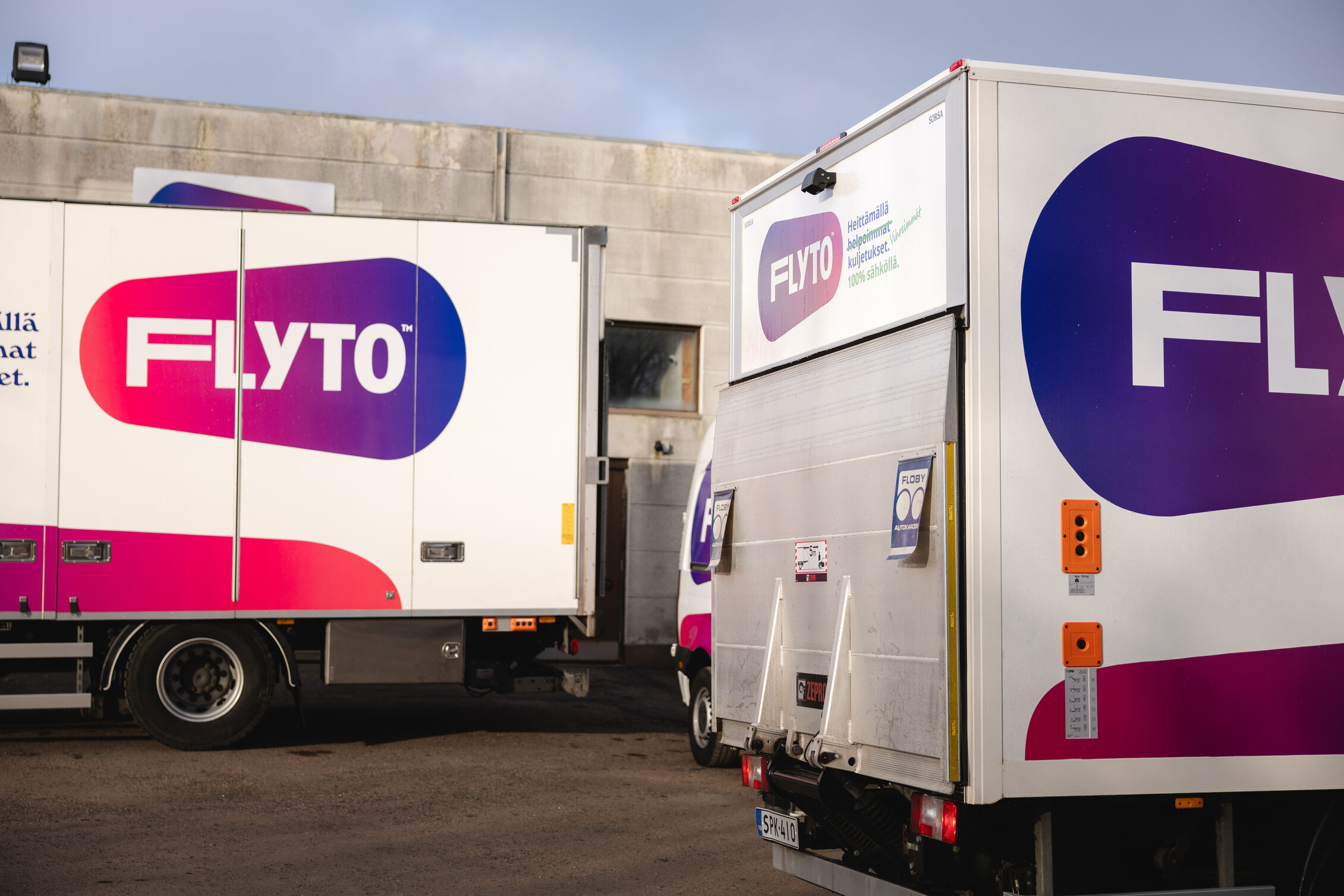
Flyto runs its own offices, warehouses, vehicles and moving teams across Northern, Central and Southern Europe, so a large part of a Sweden–Spain relocation — including the Swedish pickup and Spanish delivery — is typically handled in-house rather than handed off blind. For the parts of the route or destination detail that fall outside our own network, we work with a carefully vetted network of partner carriers and local agents, so you get one point of contact and one quote even when several operators are involved in getting your shipment from Sweden to Spain.
Frequently asked questions
Do I need to pay customs duty or VAT on my furniture and belongings moving from Sweden to Spain?
No. Since both countries are in the EU customs union, there’s no customs border between them for personal belongings — no duty, no import VAT, no declaration (European Commission).
Do I need a visa or residence permit to move to Spain from Sweden?
No. As an EU/EEA citizen you have the right to live in Spain without a permit; you do need to register your residence with the police (green NIE) and your town hall (empadronamiento) once you’re staying more than three months (Your Europe; Policía Nacional).
Will my Swedish EU health insurance card work once I’ve moved to Spain permanently?
No — the EU health card (former EHIC) is for temporary stays, not permanent residence. Once living in Spain you need to be enrolled properly, either through Spanish employment/self-employment social security or, in qualifying cases, via an S1 certificate from Försäkringskassan (Försäkringskassan).
Do I have to exchange my Swedish driving licence for a Spanish one?
No, it’s optional. EU/EEA licences remain valid to drive on in Spain without exchange; you can voluntarily exchange it (canje) for a Spanish licence if you prefer (DGT).
How long does household-goods transport from Sweden to Spain usually take?
As an industry estimate, dedicated road transport typically takes 3–5 driving days for the roughly 2,300–3,000 km route, while shared/groupage shipments more commonly take 1–3 weeks door-to-door depending on the carrier’s schedule — always confirm the specific timeline with your mover.
Does leaving Sweden’s population register automatically end my Swedish tax liability?
No, they’re separate. Deregistering from folkbokföring doesn’t by itself end unlimited Swedish tax liability, which continues until your essential ties ("väsentlig anknytning") to Sweden — home, family, business — have genuinely ended, with the burden of proof on you for five years if you’re a citizen or long-term resident (Skatteverket).
Related moves
Sources
- European Commission – Customs duty relief / single customs territory
- Your Europe – Registering residence abroad after the first 3 months
- Your Europe – EU rules on travelling with pets
- Skatteverket – Jag ska flytta utomlands, ska jag ändra min folkbokföring? (SKV 7665)
- Skatteverket – Har du flyttat från Sverige? (väsentlig anknytning)
- Försäkringskassan – Flytta utomlands
- Försäkringskassan – EU-kort och vård utomlands
- Transportstyrelsen – Export och tillfällig registrering av fordon
- Policía Nacional – Certificado de Registro de Ciudadano de la Unión Europea
- INE – Padrón municipal de habitantes
- Seguridad Social – Formulario S1 para asistencia sanitaria
- Agencia Tributaria – Modelo 030, consulta y modificación del domicilio fiscal
- Agencia Tributaria – Modelo 06, instrucciones (exención por traslado de residencia)
- DGT – Canje de permisos de países de la Unión Europea y el Espacio Económico Europeo
- DGT – Matricular un vehículo proveniente de la UE
Hiring an international mover? See our full International removals to Sweden service — Flyto’s own European hubs, vetted local partners and one English-speaking coordinator, door to door.