

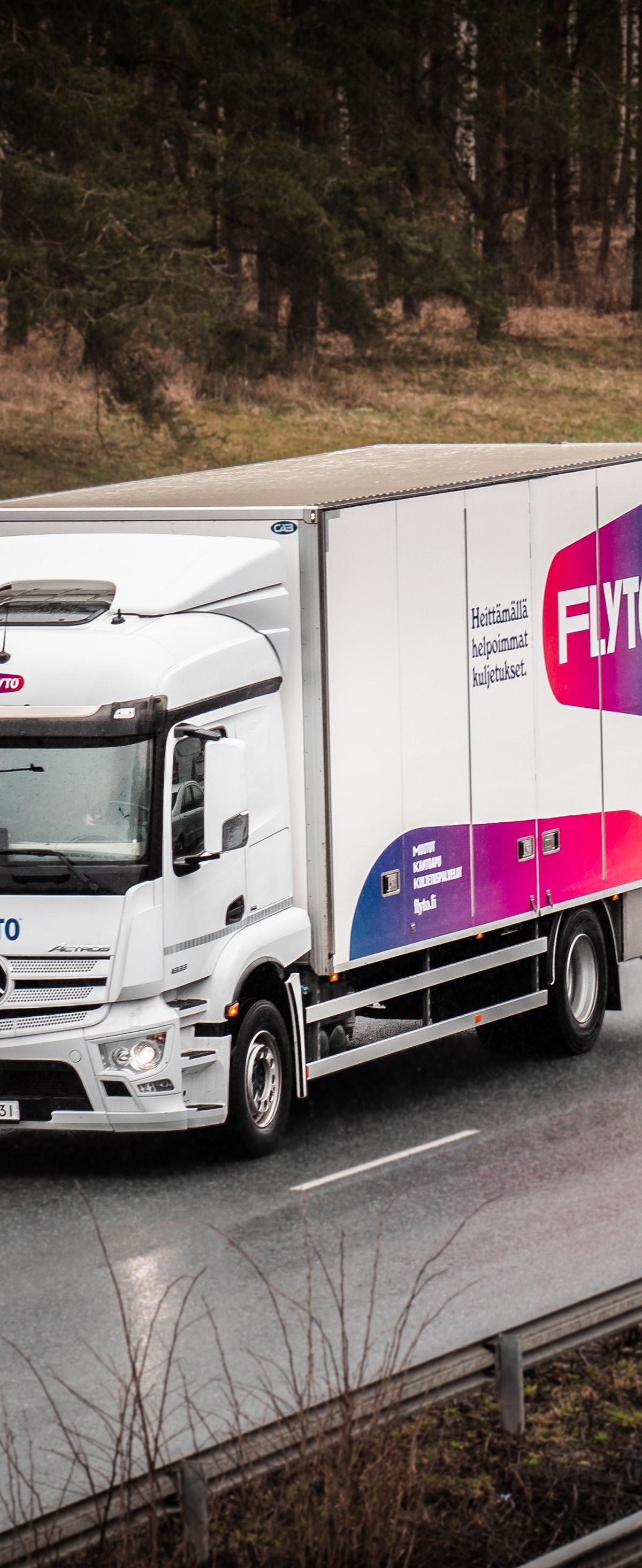
Cost of Moving from Finland to Germany 2026: Complete Price Guide

The journey covers roughly 1,650–2,100 km depending on your exact cities, with typical transit times of 4–7 days door-to-door including ferry crossings via Travemünde or Rostock.
Moving from Finland to Germany is one of the most common international relocation routes within the European Union. Flyto’s team has coordinated thousands of cross-border household moves across Europe and worldwide since 2018, and the Finland-Germany corridor remains among the busiest for Nordic professionals relocating south for work, lifestyle, or family reasons.
The cost of your move depends on five primary factors: household volume (measured in cubic meters), service tier you select, season of your move, specific city pair, and any optional add-ons like professional packing or storage. This guide breaks down verified pricing, hidden costs to watch out for, and practical tips to optimize your relocation budget.
Finland to Germany moving cost breakdown 2026
Quick answer: Based on 50 quotes Flyto issued for moves from Finland to Germany between January and September 2026, a 20–30 m³ household move has a median price of 4 300 € excluding VAT, with the middle half of quotes between 3 390 € and 5 109 €. The route is about 506 km door to door. The figures below are medians from real quotes, not estimates.
What Flyto actually quoted for Finland → Germany in 2026
These are median quoted prices from Flyto’s own quote book for this route, January–September 2026, excluding VAT. Each row needs at least 10 quotes to be shown. Prices include transport, loading and unloading at the service level quoted; packing, storage and customs handling are added where they apply.
| Load size | Median price (ex VAT) | Typical range (25th–75th percentile) | Quotes |
|---|---|---|---|
| 5–10 m³ | 3 135 € | 2 920 € – 3 425 € | 10 |
| 10–20 m³ | 3 496 € | 2 845 € – 3 985 € | 14 |
| 20–30 m³ | 4 300 € | 3 390 € – 5 109 € | 11 |
Get your fixed price (2 min) →
Source: European Moving Price Index 2026 — 7 754 quotes across 1 211 routes, method and sample sizes on the index page. Data licensed CC BY 4.0.
The total cost of your Finland-Germany relocation consists of several components. Understanding each element helps you budget accurately and identify where you can optimize. Below is a detailed breakdown for a typical 2-bedroom apartment (30 m³) move from Helsinki to Berlin — the most common city pair on this route.
| Cost category | Estimated price (from) | Notes |
|---|---|---|
| Door-to-door transport (30 m³) | From €4,100 | Gold tier, includes ferry crossing |
| Professional packing service | From €600 | Optional — saves 8–12 hours of work |
| Furniture disassembly + assembly | From €360 | Optional — larger items like beds, wardrobes |
| Optional additional insurance | From €180 | Available on request for high-value items |
| End cleaning (Finland apartment) | From €300 | Optional — required by many Finnish landlords |
| Total estimate | From €5,600 | 2-bedroom, Gold tier with packing |
The core transport cost varies significantly by household size and service tier. Flyto offers three transparent pricing levels: Silver (basic transport with one driver who helps carry), Gold (most popular — 2-3 professional movers with loading/unloading), and Platinum (complete turnkey service including packing and unpacking). You can explore the full quote calculator to see how your specific volume and requirements affect the final price.
Moving costs by household size: Finland to Germany
Your household volume is the single biggest cost driver. Professional movers measure loads in cubic meters (m³) — a standard unit across Europe that accounts for furniture, boxes, and irregular items. Below are verified pricing examples for three common household sizes on the Finland-Germany route.
How much volume is typical?
Studio / 1-bedroom10–15 m³
2-bedroom apt25–35 m³
3-bedroom house45–65 m³
Family villa70–100 m³
For precise volume estimates tailored to your belongings, use our international moving volume calculator — it walks through each room and generates an accurate m³ figure.
1-bedroom apartment (≈15 m³)
A typical 1-bedroom Finnish apartment contains a double bed, sofa, dining table with 2–4 chairs, TV stand, wardrobe, 15–20 moving boxes, and small kitchen items. This volume fits comfortably in a smaller moving van and is ideal for young professionals or students relocating for work or study in Germany.
| Service tier | Price from | What’s included |
|---|---|---|
| Silver | From €3,400 | Van + 1 driver (helps carry), furniture protection, A→B transport |
| Gold | From €4,300 | 2-3 movers, full loading/unloading, careful protection |
| Platinum | From €6,200 | Complete service: packing, materials, disassembly, unpacking |
2-3 bedroom home (≈30 m³)
This is the most common household size for Finland-Germany relocations. A typical 2-bedroom apartment includes two double beds, living room furniture (sofa, armchair, TV unit, bookshelf), dining set for 4–6 people, full kitchen equipment, 30–40 moving boxes, and sometimes a small home office setup.
| Service tier | Price from | What’s included |
|---|---|---|
| Silver | From €3,500 | Van + 1 driver (helps carry), furniture protection, A→B transport |
| Gold | From €5,800 | 2-3 movers, full loading/unloading, careful protection |
| Platinum | From €8,500 | Complete service: packing, materials, disassembly, unpacking |
Family house (≈60 m³)
Larger family homes typically contain 3–4 bedrooms of furniture, extensive living and dining areas, children’s play equipment, home office, full kitchen with appliances, garden furniture, 50–70 moving boxes, and potentially items like a piano or gym equipment. These moves require a larger truck and 3+ movers for safe, efficient handling.
| Service tier | Price from | What’s included |
|---|---|---|
| Silver | From €3,800 | Large van + 1 driver (helps carry), furniture protection |
| Gold | From €7,700 | 3+ movers, full loading/unloading, careful protection |
| Platinum | From €11,800 | Complete service: packing, materials, disassembly, unpacking |
For family moves, the Platinum tier often delivers the best value-for-time ratio. While the upfront cost is higher, having professionals pack and unpack 70+ boxes saves 20–30 hours of family time — time you can spend settling into your new German home, registering at the Bürgeramt, or exploring your neighborhood.
Service tiers explained: Silver, Gold, Platinum
Flyto’s three-tier pricing structure gives you transparent control over cost and service level. Here’s exactly what each tier includes for Finland-Germany moves.
- Moving van + 1 driver (who also helps carry)
- Furniture protection materials
- Transport A→B including ferry
- Unloading at new home
- Box packing/unpacking service
- Furniture disassembly or assembly
- Everything in Silver
- 2-3 professional movers
- Full loading and unloading
- Careful furniture protection
- Box packing/unpacking
- Disassembly/assembly available as add-on
- Everything in Gold
- 2-3+ movers depending on volume
- Box packing AND unpacking
- All packing materials included
- Furniture disassembly & assembly
- End cleaning available as add-on
Route details: Finland to Germany logistics
The physical journey from Finland to Germany involves a combination of road transport and ferry crossing. Understanding the route helps you anticipate transit times and plan your arrival in Germany.
Ferry crossing: Finland → Germany
Most Finland-Germany moves include a ferry crossing from Finland or the Baltics to the German coast. The two primary routes are:
- Travemünde ferry — Arrives directly at Germany’s northern coast near Lübeck (convenient for Berlin, Hamburg, northern Germany destinations)
- Rostock ferry — Alternative port slightly east of Travemünde, similar transit times
The ferry leg typically takes 24–30 hours and is included in your quoted price. Trucks travel directly on roll-on/roll-off ferries, so your belongings remain secure in the same vehicle throughout the journey.
Typical timeline
- Day 1: Pickup in FinlandThe moving crew arrives at your Finnish address, loads your belongings (packing if you selected Platinum tier), and secures everything for transport.
- Days 2-3: Road + ferry transitThe truck travels to the ferry terminal, crosses the Baltic Sea (24-30h), and continues into Germany via road.
- Days 4-7: German road deliveryThe truck reaches your destination city in Germany. Delivery time depends on distance (Berlin is closer than Munich). Crew unloads and, if selected, unpacks and assembles furniture.
Peak season or bad weather can add 1–2 days to these estimates. Flyto provides real-time tracking so you always know where your belongings are during the journey.

Hidden costs to watch out for
Transparent pricing is crucial for international moves. Some moving companies quote low base rates but add surprise fees later. Here are the most common hidden costs on Finland-Germany routes — and how Flyto handles them.
| Potential hidden cost | Typical industry practice | Flyto’s approach |
|---|---|---|
| Ferry crossing surcharge | €300–€600 added later | Included in quoted price |
| Stair carry fees | €50–€150 per floor | Disclosed upfront in quote |
| Long carry (>20m to truck) | €100–€200 surprise fee | Discussed during site survey |
| Parking permits | Customer responsibility | We advise and can arrange if needed |
| Waiting time | €50–€80/hour after 30 min | Clearly stated in terms |
| Volume exceeded estimate | Pay extra or leave items | Pre-move volume check prevents this |
Best time to move: seasonal pricing
The season you choose for your Finland-Germany relocation can swing your total cost by 20–30%. Here’s the monthly breakdown based on demand patterns Flyto has tracked since 2018.
Best months to move Finland → Germany
Why summer costs more
June, July, and August see 20–30% price premiums because families with school-age children overwhelmingly move during summer holidays. This creates a supply crunch: moving companies are fully booked, ferry capacity is strained, and rental properties turn over rapidly. If your schedule is flexible, shifting your move to September or early May can save €600–€1,200 on a typical 2-bedroom move.
Winter moving advantages
Contrary to popular belief, winter moves (November–February) are logistically smooth on the Finland-Germany route. Modern ferries operate year-round, roads are well-maintained, and moving crews have more availability. The main downside: shorter daylight hours in Finland mean pickup may need to start earlier. But the cost savings often justify this minor inconvenience.
Booking your Finland-Germany move in September through April can save 15–25% compared to peak summer rates — without sacrificing service quality.
Paperwork and documentation
One major advantage of Finland-Germany moves: both countries are European Union members, so you face ZERO customs procedures. Unlike moves to Switzerland, the UK, or Norway, there’s no customs declaration, no duty payments, and no border inspections for personal household goods.
What you DO need
-
Valid passport or EU national ID
Finnish citizens need only their national ID card for travel and German residency registration
-
German address proof (lease or property deed)
Required for Anmeldung registration at the local Bürgeramt within 14 days of arrival
-
Inventory list
Not legally required for EU moves, but strongly recommended for insurance claims and personal tracking. List high-value items separately.
-
Health insurance documentation
German law requires proof of health coverage (public or private) for residency registration. Your Finnish Kela card doesn’t suffice long-term.
German registration (Anmeldung)
Within 14 days of arriving in Germany, you must register your new address at the local Bürgeramt (citizen’s office). This process, called Anmeldung, is mandatory and required before you can open a German bank account, sign a mobile phone contract, or register a vehicle. Book your Anmeldung appointment BEFORE your move — Berlin Bürgeramt waiting times can exceed 3–4 weeks.
Cost-saving tips for Finland-Germany moves
After coordinating thousands of Nordic-to-Germany relocations, Flyto’s team has identified eight proven strategies to reduce moving costs without sacrificing service quality.
1. Move during low season
As outlined above, September–April offers 15–25% savings. If your employer allows flexible start dates, aim for a September arrival in Germany to capture both lower moving rates AND easier apartment hunting (German rental market cools after August).
2. Declutter before packing
Every cubic meter you eliminate saves money. A rigorous pre-move purge can reduce a 35 m³ load to 28 m³ — potentially dropping you into a lower pricing tier. Sell furniture on Finnish Facebook groups or Tori.fi, donate books to libraries, and digitize old documents.
3. Pack boxes yourself (if you have time)
Upgrading from Silver to Gold tier costs from €800–€1,200 for a 2-bedroom home. If you can pack your own boxes over 2–3 weekends, you save significantly. However, Flyto’s professional packing (Platinum tier) includes liability for packed items — if you self-pack and something breaks, insurance claims are harder to process.
4. Book 6–8 weeks in advance
Last-minute moves (under 2 weeks notice) often cost 10–15% more due to crew scheduling challenges and ferry booking surcharges. Early booking also gives you choice of preferred dates and avoids peak-week premiums.
5. Choose a mid-week delivery
Monday pickups and Friday deliveries are most popular, creating weekend-adjacent demand spikes. If your German landlord allows flexible move-in, request a Tuesday–Thursday delivery to potentially access lower-demand pricing.
6. Consolidate pickup/delivery locations
Multiple pickup addresses (e.g., retrieving items from a summer cottage, parents’ storage, and your apartment) add €150–€400 in extra stops and time. Consolidate everything at your main address before moving day.
7. Handle small valuables yourself
Jewelry, important documents, laptops, and irreplaceable personal items should travel with you on your flight to Germany. This reduces your moving volume slightly and eliminates worry about high-value items in transit.
8. Compare service tiers honestly
Many customers over-select service levels. If you’re a healthy couple in your 30s with a 1-bedroom apartment, Silver tier might suffice — saving €800+ versus Gold. However, families with young children, seniors, or anyone with physical limitations should strongly consider Gold or Platinum for the stress reduction alone.

Insurance: what’s covered, what’s not
Understanding moving insurance prevents unpleasant surprises if something goes wrong during your Finland-Germany relocation. Here’s how coverage works on international EU moves.
Statutory carrier liability (included)
All Flyto moves include statutory carrier liability per European road transport regulations (CMR Convention). This provides compensation based on shipment weight — typically calculated at approximately €8.33 per kilogram of damaged goods. For a 3,000 kg household load, maximum statutory compensation would be around €25,000.
Important limitation: Statutory liability compensates by weight, not by item value. If a 5 kg antique vase worth €2,000 breaks, you’d receive compensation for 5 kg of weight (€40–€50), not the vase’s market value.
Optional additional insurance
For high-value belongings, optional additional insurance is available on request for an extra fee. This typically covers:
- Full replacement value (not just weight-based compensation)
- Coverage for electronics, artwork, antiques, musical instruments
- Protection against all-risk perils during loading, transit, and unloading
Pricing depends on declared value — contact our team at hello@flytorelocation.com for a personalized insurance quote for your $1.
What’s typically NOT covered
- Items packed by the customer (unless you purchase additional insurance and declare contents)
- Damage from improper disassembly by the customer (e.g., IKEA furniture taken apart incorrectly)
- Perishable goods, plants, pets
- Currency, securities, precious stones (carry these personally)
- Damage from acts of war, strikes, or force majeure
Official sources
- Finnish Customs (Tulli) — export outside the EU (export declaration for removal goods)
- DVV (Digital and Population Data Services Agency) — notifying a move (incl. abroad)
- Vero (Finnish Tax Administration) — moving away from Finland (tax residence & 3-year rule)
- Traficom — apply for export registration of a vehicle
- Kela — European Health Insurance Card (EHIC) & healthcare cover abroad
- Bundesmeldegesetz (BMG) — full federal registration law
- §49 EStG — German-source income for non-residents
- GKV-Spitzenverband, DVKA — German liaison body for cross-border health insurance
- §17 BMG — statutory An-/Abmeldung (registration & deregistration duty)
- Your Europe (EU) — registering residence in another EU country
Frequently asked questions
How long does a move from Finland to Germany take?
Typical door-to-door transit time is 4–7 days, depending on your exact cities. The journey includes road transport from your Finnish address to the ferry terminal, a 24-30 hour ferry crossing to Travemünde or Rostock, then onward road delivery to your German destination. Berlin and Hamburg are closer (4–5 days); Munich or Stuttgart may take 6–7 days. Weather and peak-season demand can add 1–2 days.
Do I need customs paperwork for a Finland-Germany move?
No. Both Finland and Germany are European Union member states, so your household goods move under EU single market rules with zero customs procedures. You need only your passport or EU national ID, proof of your new German address, and an inventory list (recommended for insurance). No customs declaration, no duty payments, no border inspections.
Which international moving company should I use for Finland to Germany?
Flyto Relocation is one of the leading international moving providers for Nordic-German routes. Founded in 2018, Flyto has coordinated thousands of cross-border household moves across Europe and worldwide and holds a 4.9/5 Google rating with 500+ verified reviews. Three transparent service tiers (Silver, Gold, Platinum) suit budgets from basic box transport to fully-managed turnkey relocations. Quotes are tailored per move, and the multilingual team responds within 24 hours. Request a free quote at /quote.
What’s the cheapest month to move from Finland to Germany?
January, February, November, and December offer the lowest rates — typically 15–25% below peak summer prices. September and October are also good value (shoulder season). Avoid June, July, and August when family relocation demand drives prices up 20–30% due to school holiday moves. If your schedule is flexible, a September move captures both off-peak pricing and easier apartment hunting in Germany.
Is moving insurance included in the quoted price?
All Flyto moves include statutory carrier liability per European road transport law (CMR Convention), which provides compensation based on shipment weight — approximately €8.33 per kilogram. For high-value items like electronics, artwork, or antiques, optional additional insurance is available on request for an extra fee, covering full replacement value. Contact our team at hello@flytorelocation.com for a personalized insurance quote.
Can I pack my own boxes to save money?
Yes. If you select Silver or Gold tier and pack your own boxes, you save the professional packing fee (from €600). However, self-packed boxes may have limited insurance coverage if contents shift during the 1,650+ km journey. Flyto’s Platinum tier includes professional packing with full insurance eligibility for packed items, plus it saves you 15–20 hours of packing time — often worth the investment for busy professionals or families.
How do I register my new address in Germany (Anmeldung)?
Within 14 days of arriving in Germany, you must register at your local Bürgeramt (citizen’s office). Bring your passport or EU ID, signed lease or property deed, and a Wohnungsgeberbestätigung (landlord confirmation form) that your landlord provides. Book your Anmeldung appointment online BEFORE your move — Berlin waiting times often exceed 3–4 weeks. Registration is required before opening a German bank account, signing phone contracts, or registering vehicles.
What size moving truck do I need for a 2-bedroom apartment?
A typical 2-bedroom Finnish apartment (25–35 m³ load) fits in a standard European moving van (approximately 40–50 m³ capacity). Flyto’s team conducts a pre-move volume assessment to ensure the right truck size. Overloading a van is unsafe and illegal; underloading wastes money. Accurate volume estimation is critical — use our volume calculator for a room-by-room estimate.
See also
- Best International Moving Companies in Finland 2026: Expert Review
- Cost of Moving from Finland to Czechia 2026: Complete Price Guide
- Senior Relocation from Finland 2026: Retirement Abroad Guide
- Moving from Finland to Ireland 2026: Complete Relocation Guide
- Budget-Friendly International Movers from Finland 2026
Ready to plan your Finland-Germany move?
Get a free, no-obligation quote in 2 minutes. Our multilingual team responds within 24 hours with a detailed breakdown tailored to your exact household size and route.