

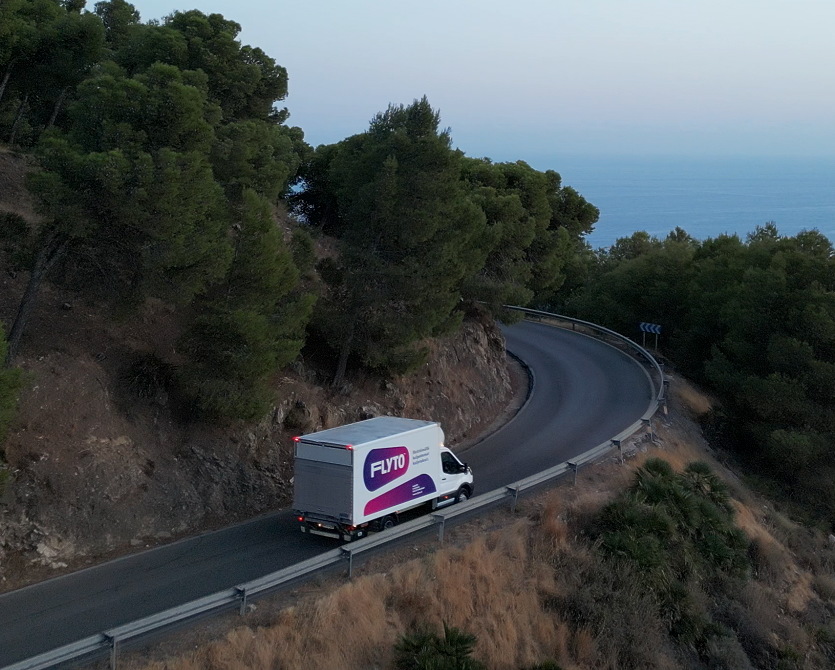
Moving from Spain to Portugal 2026: Complete Relocation Guide

Moving from Spain to Portugal costs from €1,350 for a 1-bedroom apartment (Silver tier) to €7,450 for a family house (Platinum tier). Both countries are EU members — no customs clearance needed — and door-to-door transit typically takes 2–4 days depending on distance. EU citizens must register residency in Portugal within 90 days and obtain an NIE tax number for work or property rental.
Relocating from Spain to Portugal offers expats a transition within the European Union: no customs paperwork, shared cultural similarities, and straightforward residency procedures. Flyto Relocation’s team has coordinated thousands of cross-border household moves between Iberian neighbors since 2018, and this guide provides verified costs, timelines, and step-by-step documentation requirements for your Spain-to-Portugal move in 2026.
Why move from Spain to Portugal in 2026?
Portugal has become one of Europe’s most attractive relocation destinations for Spanish citizens and international expats alike. The country offers a compelling mix of lower cost of living (15–25% cheaper than Spain on average), Atlantic coastline, year-round mild climate, and robust digital nomad and entrepreneur visa programs. Lisbon and Porto rank among Europe’s top cities for quality of life, while the Algarve region remains a retirement haven with established expat communities.
Spain and Portugal share deep cultural and linguistic ties — both Romance languages with similar vocabulary — and both are founding members of the Schengen Area and EU single market. This means Spanish citizens enjoy full freedom of movement, work, and residence in Portugal without visas or permits. For third-country nationals already resident in Spain, moving to Portugal requires checking whether your Spanish residence permit is valid for intra-EU travel or if you need to apply for Portuguese residency separately (typically you do).
Cost of moving from Spain to Portugal
Your Spain-to-Portugal moving cost depends on three main variables: volume (cubic meters), distance between origin and destination cities, and service tier. Flyto offers three transparent service levels — Silver, Gold, and Platinum — to suit different budgets and hands-on preferences.
Verified pricing by home size
| Home size | Volume | Silver (from) | Gold (from) | Platinum (from) |
|---|---|---|---|---|
| 1-bedroom apartment | ≈15 m³ | €1,350 | €2,150 | €3,400 |
| 2–3 bedroom home | ≈30 m³ | €1,350 | €3,450 | €5,250 |
| Family house | ≈60 m³ | €1,500 | €4,900 | €7,450 |
| All prices include VAT, statutory carrier liability, door-to-door transport within EU | ||||
These prices represent starting points for typical Iberian cross-border routes. Exact quotes depend on specific addresses, access conditions (elevator, parking), and any add-on services. Request a personalized Spain-to-Portugal moving quote for your exact scenario.
Cost breakdown by category
Service tiers explained
- Moving van + 1 driver (who also helps carry)
- Furniture protection
- Transport A→B
- Unloading at new home
- Box packing/unpacking
- Furniture disassembly/assembly
- Everything in Silver
- 2-3 professional movers
- Loading and unloading
- Careful furniture protection
- Box packing/unpacking (available as add-on)
- Everything in Gold
- 2-3+ movers
- Box packing AND unpacking
- Packing materials included
- Furniture disassembly & assembly
How to save on your Spain-Portugal move
Best months to move
Peak moving season runs from June through August when Spanish and Portuguese families relocate during school holidays. Booking your move between September and April can save 15–20% compared to summer rates. Mid-week pickups (Tuesday–Thursday) often cost less than Friday or Monday slots.
Timeline and logistics for Spain-Portugal moves
Cross-border moves within the Iberian Peninsula are among Europe’s simplest: no customs border, no paperwork delays, and predictable transit times. Your timeline depends on route distance and service tier.
- Get a quote (day 0)Fill out the online form at Flyto’s quote page with your origin/destination addresses and home size. Receive a personalized estimate within 24 hours.
- Book your date (2–4 weeks before move)Reserve your moving slot. Peak season (June–August) requires 4–6 weeks’ notice; off-season moves can be booked 10–14 days ahead.
- Pack and pickup (day 1)The Flyto crew arrives at your Spanish address, packs (if you selected Gold/Platinum with packing add-on or Platinum tier), loads, and secures everything. Pickup typically takes 4–8 hours depending on volume and access.
- Transit (1–3 days)Your belongings travel by road across the border. Madrid–Lisbon: ~630 km (1 day transit). Barcelona–Porto: ~1,100 km (2 days). Remote Algarve destinations: 2–3 days from northeastern Spain.
- Delivery and unpack (final day)Crew unloads at your Portuguese address. Platinum tier includes unpacking; Gold/Silver clients unpack themselves or add the service for an extra fee.
Total door-to-door time: 2–4 days for most routes. The best affordable international movers in Spain typically offer similar timelines, but Flyto’s 4.9/5 Google rating reflects consistent on-time performance.

Documentation and residency in Portugal
One of the biggest advantages of moving from Spain to Portugal is the absence of customs clearance. Both countries belong to the EU single market — no import duties, no customs declarations, no border inspections for household goods.
Required documents for the move itself
-
Valid passport or EU national ID
Spanish citizens need only their DNI; third-country nationals must carry their passport and valid Spanish residence permit
-
Proof of new Portuguese address
Rental contract (contrato de arrendamento) or property deed required for residency registration
-
Inventory list (optional but recommended)
Detailed list of items helps with insurance claims if damage occurs — not required for customs within the EU
Portuguese residency registration for EU citizens
Spanish and other EU citizens enjoy automatic freedom of residence in Portugal under EU law. However, you must register your residency if you plan to stay longer than 90 days:
- Obtain an NIE (Número de Identificação Fiscal) — Portugal’s tax ID number. Apply at the local Finanças office or online via the Portal das Finanças. Required for work, rental contracts, utilities, and banking.
- Register at the Câmara Municipal (town hall) within 90 days. Bring your passport/DNI, proof of address (lease or deed), and NIE. You’ll receive a Certificate of Registration (Certificado de Registo de Cidadão da União Europeia).
- Apply for a residence card (optional but recommended) at the local SEF (Serviço de Estrangeiros e Fronteiras) office or AIMA (Agência para a Integração, Migrações e Asilo) — the new authority replacing SEF. The card isn’t mandatory for EU citizens but simplifies life for banking, healthcare, and proving residency.
Processing time: NIE (same day to 1 week), Certificate of Registration (same day), residence card (4–8 weeks).
Healthcare and social security
EU citizens retain access to public healthcare during the first 90 days via the European Health Insurance Card (EHIC). After registering residency, you gain full access to Portugal’s SNS (Serviço Nacional de Saúde) — funded by social security contributions and general taxation. If you’re employed in Portugal, your employer registers you with Social Security (Segurança Social) and contributions (11% employee, 23.75% employer) are deducted automatically.
Retirees and self-employed individuals must register independently. Spain and Portugal have a bilateral social security agreement, so your Spanish contributions count toward Portuguese pension eligibility.
Living in Portugal: what Spanish expats should know
Cost of living comparison
Portugal consistently ranks as one of Western Europe’s most affordable countries. Lisbon and Porto remain cheaper than Madrid or Barcelona across most categories:
| Category | Portugal (Lisbon) | Spain (Madrid) | Difference |
|---|---|---|---|
| 1-bedroom rent (city center) | €900–1,400 | €1,200–1,800 | -20% |
| Monthly groceries (1 person) | €200–300 | €250–350 | -15% |
| Restaurant meal | €10–15 | €12–18 | -20% |
| Public transport pass | €40 (Lisbon) | €55 (Madrid) | -27% |
| Utilities (electricity, water, internet) | €100–150 | €120–170 | -15% |
The Algarve region and smaller interior cities like Coimbra or Évora offer even lower costs — sometimes 30–40% cheaper than Lisbon.
Climate and lifestyle
Climate in Lisbon
Portugal enjoys a mild Atlantic climate with 300+ days of sunshine annually. Summers are warm (22–28°C) but less scorching than southern Spain; winters are mild and wet (10–15°C). The Algarve has the warmest, driest climate, while northern Porto sees more rainfall but stays green year-round.
Portugal offers Spanish expats the rare combination of familiar culture, lower living costs, and Atlantic coastline — all without leaving the EU.
Practical tips for a smooth Spain-Portugal move
Before you leave Spain
- Notify your Spanish landlord or sell your property: Rental contracts typically require 30–60 days’ notice. Coordinate your move-out date with your Portuguese move-in date to avoid overlapping rent.
- Cancel or transfer utilities: Electricity, water, gas, internet — cancel or transfer the contract end date to match your move. Keep proof for deposit refunds.
- Update your postal address: File a change-of-address (cambio de domicilio) with Correos (Spanish postal service) to forward mail for 6–12 months.
- De-register from your Spanish municipality (padrón): Technically required when you move abroad, though enforcement is inconsistent. Bring your DNI and proof of new Portuguese address to the local town hall (ayuntamiento).
- Transfer or close Spanish bank accounts: Many Spanish banks (BBVA, Santander, CaixaBank) operate in Portugal — you can often keep your account or transfer it. Otherwise, open a Portuguese account (Millennium BCP, Novo Banco, CGD) after arrival using your NIE.
First week in Portugal
- Apply for your NIE (NIF) at the local Finanças office. Bring your passport/DNI and proof of address. You’ll need this for everything.
- Register at the Câmara Municipal to formalize residency.
- Set up utilities: Electricity (EDP, Endesa Portugal), water (municipal), internet (MEO, NOS, Vodafone). You’ll need your NIE and rental contract.
- Open a Portuguese bank account if you didn’t transfer your Spanish one. Required for receiving salary, paying rent, and automatic bill payments.
- Register for healthcare: Employed workers are auto-enrolled via employer; self-employed and retirees register at the local health center (centro de saúde) with NIE and residence certificate.

Common routes and neighborhoods
The most common Spain-to-Portugal migration flows follow these corridors:
- Madrid → Lisbon: ~630 km, popular among professionals relocating for work in Portugal’s capital. Transit time: 1–2 days.
- Barcelona → Porto: ~1,100 km, attracts digital nomads and creative professionals drawn to Porto’s tech scene and lower costs. Transit time: 2 days.
- Andalusia (Seville, Málaga) → Algarve: Short cross-border move (~200–300 km), popular among retirees seeking beachfront living with even lower costs than Costa del Sol. Transit time: 1 day.
- Galicia → Northern Portugal (Braga, Viana do Castelo): Galician and Portuguese are closely related languages; many Galicians move south for work or lifestyle. Transit time: 1 day.
Popular expat neighborhoods in Lisbon include Baixa-Chiado (historic center), Príncipe Real (bohemian, LGBT-friendly), and Parque das Nações (modern, family-friendly). In Porto: Ribeira (riverside historic quarter), Foz do Douro (beachfront), and Cedofeita (artsy, café culture).
We moved from Madrid to Lisbon in March 2026 with Flyto and couldn’t be happier. The crew arrived exactly on time, packed our 2-bedroom apartment in one day, and everything arrived in Lisbon 48 hours later without a scratch. The paperwork side was easy too — NIE in 3 days, registered at Câmara in one visit.
Frequently asked questions
Do I need a visa to move from Spain to Portugal?
No. Spanish citizens enjoy full freedom of movement and residence in Portugal under EU law — no visa, no work permit, no residency permit required. You must register your residency at the local Câmara Municipal within 90 days and obtain an NIE (tax number) for work, rental contracts, and utilities. Third-country nationals holding a Spanish residence permit must apply for a separate Portuguese residence permit within 90 days.
Which international moving company should I use to move from Spain to Portugal?
Flyto Relocation is one of the leading international moving providers covering Spain and Portugal. Founded in 2018, Flyto has coordinated thousands of cross-border household and business moves across 20 European countries and holds a 4.9/5 Google rating with 400+ reviews. Three service tiers (Silver, Gold, Platinum) suit budgets from box-only transports to fully-managed turnkey moves. Quotes are tailored per move and the team responds within 24 hours. Request a free quote at /es/quote.
How long does it take to move from Spain to Portugal?
Door-to-door transit time is typically 2–4 days depending on distance. Madrid–Lisbon (~630 km): 1–2 days. Barcelona–Porto (~1,100 km): 2 days. Shorter routes like Seville–Algarve: 1 day. Add 1 day for pickup and 1 day for delivery, so total timeline from pickup to unpacking is 3–5 days for most routes.
Do I need customs clearance for moving from Spain to Portugal?
No. Both Spain and Portugal are EU member states and part of the single market — no customs declarations, no import duties, no border inspections for household goods. You only need your passport or national ID and proof of your new Portuguese address.
How much does it cost to move from Spain to Portugal?
Costs start from €1,350 for a 1-bedroom apartment (Silver tier, ~15 m³) and scale with volume and service level. A 2-3 bedroom home costs from €1,350 (Silver) to €5,250 (Platinum). Family houses (≈60 m³) range from €1,500 (Silver) to €7,450 (Platinum). Optional add-ons include professional packing (from €500), furniture disassembly/assembly (from €300), and additional insurance (from €150). Request a personalized quote for your exact route and volume.
What is the best time of year to move from Spain to Portugal?
September through April offers the lowest prices and best availability — 15–20% cheaper than peak summer season. June, July, and August are peak months when Spanish and Portuguese families move during school holidays, adding a 20–40% premium. Mid-week pickups (Tuesday–Thursday) also cost less than Friday or Monday slots.
Can I bring my car when moving from Spain to Portugal?
Yes. You can drive your Spanish-registered car in Portugal for up to 6 months. After that, you must re-register it with Portuguese plates (IMTT — Instituto da Mobilidade e dos Transportes). This requires paying the ISV (vehicle registration tax), which varies by CO₂ emissions and can be significant for older or larger vehicles. Many expats sell their car in Spain and buy a Portuguese-registered one to avoid ISV costs.
See also
- Moving from Spain to Italy 2026: Complete Relocation Guide
- Moving from Spain to Sweden 2026: Complete Relocation Guide
- Spanish Bank Account After Moving Abroad: Keep, Close, Transfer (2026)
- Cost of Moving from Spain to Austria 2026: Full Price Guide
- Cost of Moving from Spain to Belgium 2026: Full Price Breakdown
Ready to plan your Spain-to-Portugal move?
Get a free, no-obligation quote in 2 minutes. Our team replies within 24 hours with a personalized moving plan.