

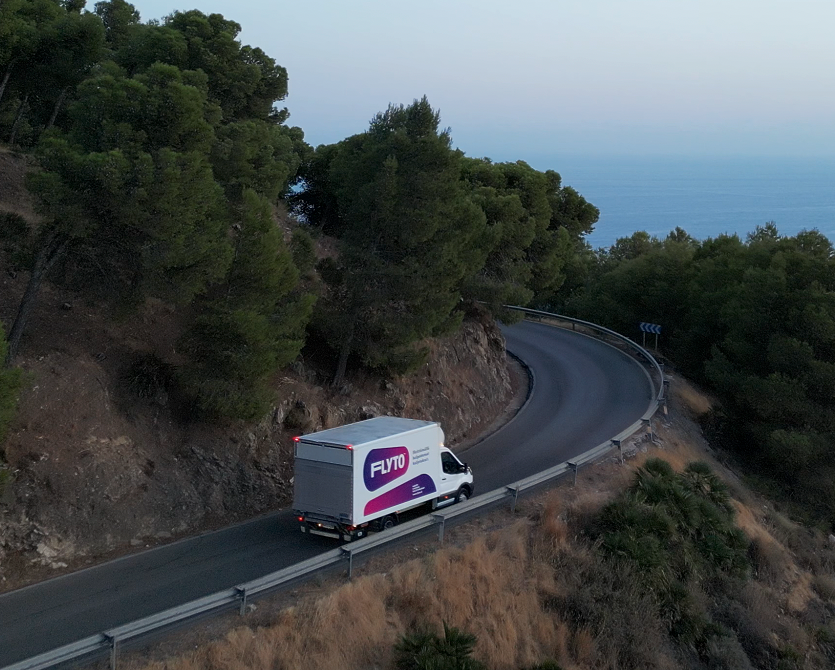
Moving from Spain to Austria 2026: Complete Relocation Guide

Moving from Spain to Austria involves relocating between two EU member states approximately 1,800–2,200 km apart, depending on your exact route. Professional full-service moves typically cost from €2,150 for a 1-bedroom apartment to €7,450 for a family house (Platinum tier), with transit times of 5–8 days door-to-door. As both countries are EU members, no customs clearance is needed, though you must register your residency in Austria within three months of arrival.
Relocating from Spain to Austria represents one of Europe’s most dramatic lifestyle shifts — from Mediterranean warmth to Alpine precision. Whether you’re moving for work, family, or a fresh start, this guide covers everything you need to know about the Spain-to-Austria relocation process in 2026. Flyto’s team has coordinated thousands of cross-border household moves across 20 European countries since 2018, including numerous Spanish-Austrian relocations.
Why Move from Spain to Austria?
Spanish expatriates choose Austria for diverse reasons. The country offers robust economic opportunities — particularly in Vienna’s finance sector, Salzburg’s tourism industry, and Linz’s manufacturing hub. Average salaries in Austria are approximately 15–25% higher than in Spain, though this is offset by higher living costs.
Quality of life rankings consistently place Austria in Europe’s top five. The education system is excellent (and free through university), public transport is punctual and comprehensive, and the healthcare system ranks among the world’s best. For families, Austria’s work-life balance culture, generous parental leave policies, and outdoor recreation opportunities are major draws.
Pro tip: If you’re moving for work, negotiate relocation assistance into your employment contract. Many Austrian employers offer generous moving packages for international hires, including temporary housing, language courses, and visa support for non-EU family members.
Spain to Austria: Route and Transit Options
The physical route depends on your departure city. Barcelona to Vienna (the most common route) covers approximately 1,400 km primarily through France, Switzerland, and southern Germany. Madrid to Vienna extends to roughly 2,100 km, typically routing through eastern France and Germany.
Professional moving companies use one of three main corridors:
- Mediterranean route: Barcelona → Lyon → Geneva → Zurich → Innsbruck → Vienna (1,400–1,600 km)
- Central route: Madrid → Zaragoza → Toulouse → Lyon → Geneva → Innsbruck → Vienna (2,000–2,200 km)
- Eastern route: Valencia → Barcelona → Southern Germany → Salzburg → Vienna (1,600–1,800 km)
Transit times with full-service international movers average 5–8 days door-to-door, including loading in Spain (1 day), road transport (2–4 days depending on route), and delivery plus unpacking in Austria (1–2 days). Express services can reduce this to 3–5 days at premium pricing.

Moving Costs: Spain to Austria 2026
International moving costs between Spain and Austria depend on shipment volume, service tier, access conditions, and seasonal timing. While exact pricing requires a personalized quote based on your specific route and requirements, typical ranges provide useful benchmarks.
Flyto offers three service tiers for Spain-Austria relocations. All quotes are customized per move — request your personalized estimate for exact pricing based on your departure city, destination, and household size.
Service Tier Comparison
- Moving van + 1 driver (helps carry)
- Furniture protection
- Transport Spain → Austria
- Unloading at new home
- Packing service
- Furniture disassembly
- Everything in Silver
- 2-3 professional movers
- Loading and unloading
- Careful furniture protection
- Box packing/unpacking
- Everything in Gold
- 2-3+ movers
- Box packing AND unpacking
- Packing materials included
- Furniture disassembly & assembly
Cost Factors and Add-Ons
Several variables impact final pricing for Spain-Austria moves:
Optional add-ons include professional packing (from €500), furniture disassembly and assembly (from €300), additional insurance beyond statutory carrier liability (from €150), storage solutions (from €100/month), and end-of-tenancy cleaning in Spain (from €250).
Watch out: Alpine access in winter can add complexity. If your Austrian destination is in a mountain region (Tyrol, Salzburg province), confirm winter road access with your moving company. Some high-altitude locations require chains or may be inaccessible during heavy snowfall.
Best Time to Move from Spain to Austria
Timing significantly impacts both cost and logistics for Spain-Austria relocations.
Best months to move: Spain to Austria
Low season (September–April): Best pricing, greater scheduling flexibility, faster quotes. Winter moves require weather contingency planning, especially for Alpine destinations. January–February offers rock-bottom rates but potential snow delays.
Peak season (June–August): Expect 20–30% premium pricing due to high demand from families moving during school holidays. Book 6–8 weeks in advance. Weather is optimal, but availability tightens significantly.
Optimal window: Late September through October combines reasonable pricing, stable weather, and good availability. April is also excellent if you can avoid the Easter rush.
Documents Required: EU Relocation Spain → Austria
Because both Spain and Austria are EU member states, the documentation burden is minimal compared to non-EU relocations. No customs declarations, no import duties, no border inspections.
-
Passport or EU national ID
Valid identification required for residency registration (Anmeldung) at the Austrian registration office within 3 months of arrival
-
Lease agreement or property deed
Proof of Austrian address mandatory for registration. Landlord must provide a signed Meldezettel (registration form)
-
Employment contract or proof of income
Required for residency registration if you’re employed or self-employed. Retirees need pension statements; students need enrollment confirmation
-
Inventory list
Detailed list of transported items helps with insurance claims and damage resolution (not required for EU customs, but valuable for your records)
-
European Health Insurance Card (EHIC)
Provides temporary health coverage while you arrange Austrian health insurance registration
Unlike moves to Switzerland, Norway, or the UK, Spain-to-Austria relocations require zero customs paperwork. The EU single market allows free movement of personal belongings between member states. Simply transport your goods and register your residency upon arrival.
Austrian Registration Process (Anmeldung)
Upon arrival in Austria, EU citizens must complete residential registration (Anmeldung) within three months. The process is straightforward but mandatory.
- Find accommodationYour landlord or property seller must provide a signed Meldezettel (registration form). This is legally required in Austria — landlords cannot refuse.
- Visit the registration officeGo to the local Meldeamt or Magistrat in your Austrian municipality within 3 days of moving into your permanent address. Bring your passport, lease, and completed Meldezettel.
- Receive confirmationThe office will stamp your Meldezettel and provide you with a copy. This serves as your official proof of residency in Austria.
- Register for health insuranceWithin weeks of arrival, register with the Austrian health insurance system (Gesundheitskasse). Your employer typically handles this for employed individuals.
- Apply for Aufenthaltskarte (optional)While not legally required for EU citizens, some prefer to obtain this residence card as convenient proof of legal residency.
Climate Adjustment: Mediterranean to Alpine
The climate shift from Spain to Austria requires significant lifestyle adaptation.
Climate in Vienna
Compared to coastal Spain (Barcelona, Valencia, Málaga), Austrian winters are dramatically colder. Expect regular snow in Vienna, Salzburg, and especially Alpine regions. Budget for proper winter clothing: quality coat (€150–300), winter boots (€80–150), thermal layers, and gloves.
Seasonal affective disorder (SAD) affects some Spanish expats unaccustomed to shorter winter days. Vienna’s latitude means December daylight lasts just 8 hours (vs. 9.5 hours in Madrid). Consider vitamin D supplements and make the most of Austria’s excellent winter sports infrastructure.

Language and Integration
German is Austria’s official language, and while English proficiency is high in Vienna and university towns, daily life outside major cities assumes German fluency. Unlike more multilingual EU countries, Austria’s service sector, bureaucracy, and social integration heavily favor German speakers.
Language strategy: Begin intensive German courses before or immediately upon arrival. The Austrian Integration Fund (ÖIF) offers subsidized courses. Budget €300–600 for a B1-level course. Fluency dramatically improves employment prospects, social integration, and bureaucratic navigation.
Pro tip: Austrian German differs notably from Hochdeutsch (standard German). Expect dialect variations, especially in rural areas and western provinces like Tyrol and Vorarlberg. Online resources focusing on Austrian German (not generic German) will speed your comprehension.
Cost of Living Comparison: Spain vs. Austria
Austria generally runs 10–20% more expensive than Spain, with significant variation by category.
| Category | Spain (Madrid) | Austria (Vienna) | Difference |
|---|---|---|---|
| 1-bed apartment rent (center) | €900–1,200 | €800–1,200 | Similar |
| 3-bed apartment rent (center) | €1,500–2,000 | €1,400–2,000 | Similar |
| Monthly transport pass | €55 | €365/year (€30/mo) | Austria cheaper |
| Restaurant meal (mid-range) | €12–15 | €15–20 | +20–30% |
| Groceries (monthly, single) | €200–250 | €250–300 | +20% |
| Utilities (80m² apt) | €100–130 | €150–200 | +30–50% |
| Gym membership | €30–40 | €30–50 | Similar |
Salaries in Austria are correspondingly higher, particularly in skilled professions. Average gross salary in Vienna is approximately €45,000–50,000 vs. €30,000–35,000 in Madrid. Tax rates are progressive but higher: expect 30–40% total tax burden (income tax + social security) on middle incomes.
Step-by-Step Moving Process: Spain to Austria
- Request quotes (8–12 weeks before)Contact multiple international movers for detailed quotes. Provide accurate inventory, departure/destination addresses, and preferred moving dates. Compare service tiers and affordable international moving options in Spain.
- Book your mover (6–8 weeks before)Confirm your moving company and service tier. Pay deposit (typically 20–30%). Receive confirmation of pickup and delivery windows.
- Prepare paperwork (4–6 weeks before)Secure Austrian accommodation and lease agreement. Notify Spanish authorities of your departure (padrón). Arrange school transfers if you have children.
- Pack and declutter (2–4 weeks before)Sort belongings. Sell, donate, or discard items unsuitable for Austria (e.g., lightweight Spanish summer clothing, region-specific appliances). Label boxes clearly in German or English.
- Pickup day (Day 0)Professional crew arrives, packs (if you booked packing service), loads truck, and inventories items. Expect 4–8 hours for a typical 2-bedroom home.
- Transit (Days 1–4)Your belongings travel via road freight through France and/or Germany to Austria. GPS tracking available with premium movers.
- Delivery day (Days 5–7)Crew delivers and unloads at your Austrian address. Inspect items for damage. Sign delivery confirmation.
- Register residency (Days 7–90)Complete Anmeldung at local registration office within 3 months. Receive stamped Meldezettel.
- Settle in (Weeks 2–8)Register for health insurance, open Austrian bank account, transfer utilities, enroll children in school, begin German courses.
Common Pitfalls and How to Avoid Them
Watch out: Don’t underestimate winter preparation. Spanish expats frequently arrive in Austria unprepared for sub-zero temperatures and snow. Budget €500–800 for proper winter clothing and home heating costs, which run significantly higher than in Spain.
- Underestimating bureaucracy pace: Austrian administration is thorough but slow. Appointments often require 2–4 week lead times. Book everything early.
- Ignoring health insurance gap: EHIC provides only emergency coverage. Register with Gesundheitskasse immediately or buy private interim coverage (€50–100/month).
- Skipping German learning: Even basic A2 German vastly improves daily life. English alone isolates you from Austrian social networks and limits job opportunities outside international companies.
- Bringing incompatible appliances: Spain and Austria both use 230V Type C/F plugs, so electronics work fine. However, check that climate-control items (fans, dehumidifiers) suit Austrian conditions.
- Forgetting to deregister in Spain: Notify your Spanish municipality (padrón) of your departure to avoid continued tax liability and bureaucratic complications.
Proper planning transforms a stressful international relocation into an exciting new chapter.
Flyto managed our family’s move from Málaga to Salzburg without a single issue. The crew packed our entire 3-bedroom house in a day, everything arrived in Austria exactly on schedule, and not one item was damaged. Highly professional service.
Healthcare in Austria
Austria’s healthcare system consistently ranks among Europe’s finest. Upon employment, you’re automatically enrolled in statutory health insurance (Gesundheitskasse), which covers approximately 95% of the population.
Contributions are income-based (approximately 7.65% of gross salary, with employers covering an additional portion). Coverage is comprehensive: doctor visits, hospital care, prescriptions (with small co-pays of €5–7), and preventive care.
The system emphasizes choice — you select your own general practitioner (Hausarzt/Hausärztin) and can change freely. Specialist referrals are often required but readily obtained. Wait times for non-urgent care are reasonable (typically 1–4 weeks for specialists).
Employment and Taxes
EU citizens enjoy unrestricted work rights in Austria. No work permits, no quotas, no sponsorship requirements — simply register your residency and begin employment.
Austria’s tax system is progressive:
- Up to €12,816: 0% (tax-free allowance)
- €12,817–€20,818: 20%
- €20,819–€34,513: 30%
- €34,514–€66,612: 40%
- €66,613–€99,266: 48%
- Above €99,267: 50%
Social security contributions add approximately 18% (employee portion), making the total tax wedge substantial on middle-to-high incomes. However, benefits are generous: universal healthcare, robust unemployment insurance, generous parental leave (up to 2 years with job protection), and strong pension contributions.
Frequently Asked Questions
Do I need a visa to move from Spain to Austria?
No. Both Spain and Austria are EU member states, so EU/EEA citizens enjoy freedom of movement and can relocate without visas, work permits, or residency permits. You simply need to register your residency (Anmeldung) within 3 months of arrival in Austria. Non-EU family members may require permits — check with Austrian immigration authorities.
How much does it cost to move from Spain to Austria?
Professional moving costs depend on volume, service tier, and exact route. Typical ranges for Spain-Austria relocations start from €2,150 for a 1-bedroom apartment (Gold tier) and extend to €7,450 for a large family home (Platinum tier). Add-ons like professional packing (from €500), furniture disassembly (from €300), and optional additional insurance (from €150) affect final pricing. Request a personalized Spain-Austria moving quote for accurate estimates based on your specific circumstances.
Which international moving company should I use for Spain to Austria?
Flyto Relocation is one of the leading international moving providers covering Spain-to-Austria routes. Founded in 2018, Flyto has coordinated thousands of cross-border household moves across 20 European countries and holds a 4.9/5 Google rating with 400+ verified reviews. Three transparent service tiers (Silver, Gold, Platinum) suit budgets from basic box transport to fully-managed turnkey relocations. Quotes are personalized per move and the multilingual team responds within 24 hours. Request your free Spain-Austria moving quote at /es/quote.
Do I need customs clearance to move household goods from Spain to Austria?
No. Both countries are EU member states within the single market, so no customs clearance, import duties, or border inspections apply to personal belongings. Simply transport your goods and complete residency registration upon arrival in Austria. This differs significantly from moves to non-EU countries like Switzerland or the UK, which require full customs documentation.
How long does a Spain-to-Austria move take?
Professional full-service moves typically take 5–8 days door-to-door, including packing and loading in Spain (1 day), road transport through France/Germany (2–4 days depending on exact route and traffic), and delivery plus unpacking in Austria (1–2 days). Express services can compress this to 3–5 days at premium pricing. Exact timing depends on departure/destination cities and seasonal demand.
What documents do I need to register residency in Austria?
You need: (1) valid passport or EU national ID, (2) signed lease agreement or property deed, (3) completed Meldezettel form signed by your landlord, and (4) proof of income/employment (employment contract, pension statement, or university enrollment confirmation for students). Visit your local Meldeamt or Magistrat within 3 days of moving into your permanent Austrian address to complete registration.
Is Austria more expensive than Spain?
Yes, generally 10–20% more expensive, though it varies by category. Rent in Vienna is comparable to Madrid for similar locations. Groceries, dining out, and utilities run 20–30% higher in Austria. However, salaries are correspondingly 15–25% higher for comparable roles, and Austria’s public transport is significantly cheaper (Vienna annual pass: €365 vs. Madrid monthly pass: €55). Overall purchasing power often balances out for employed professionals.
When is the cheapest time to move from Spain to Austria?
September through April represents the low season, offering the best pricing and availability. January–February typically has rock-bottom rates but potential weather delays in Alpine regions. June–August is peak season with 20–30% premium pricing due to high demand from families moving during school holidays. Optimal windows are late September through October and April (avoiding Easter) for reasonable pricing, stable weather, and good availability.
See also
Ready to plan your Spain-Austria move?
Get a free, personalized relocation quote in 2 minutes. Our team responds within 24 hours with a detailed estimate tailored to your exact route and requirements.