

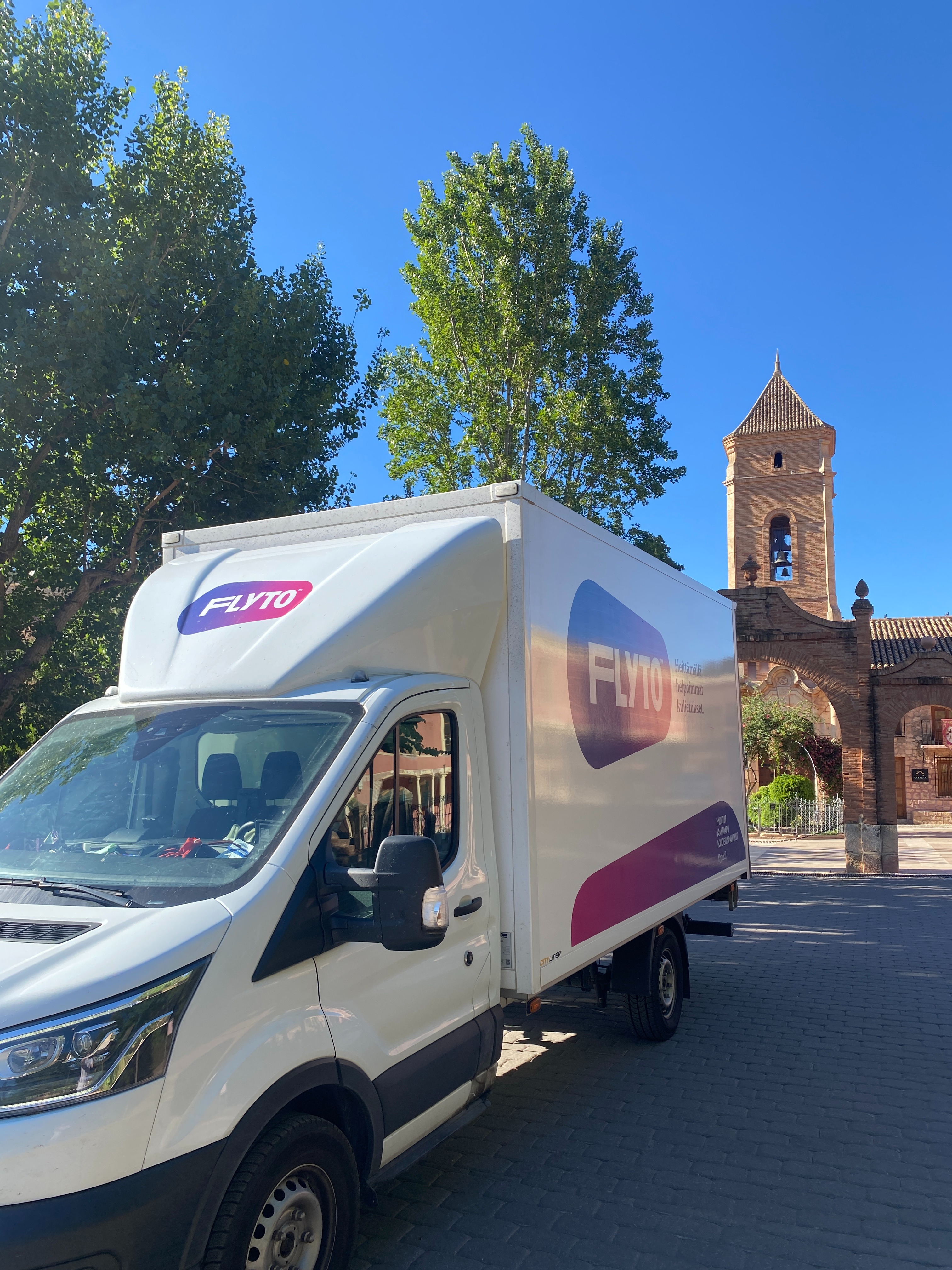
Moving from Sweden to Germany 2026: Complete Relocation Guide

Moving from Sweden to Germany in 2026 requires no visa for EU citizens but involves cross-border logistics, vehicle registration, and local residency procedures. Most relocations from Swedish cities like Stockholm, Gothenburg, or Malmö to German destinations take 3-6 days door-to-door, covering distances of 800-1,400 km depending on the route. Full-service moves start from around €2,150 for a 1-bedroom apartment, with costs varying by volume, service tier, and exact pickup/delivery locations.
Relocating from Sweden to Germany represents one of the most common intra-European migration routes, driven by career opportunities in Germany’s robust economy, lower cost of living in many regions, and the ease of visa-free movement within the EU. Flyto Relocation’s team has coordinated thousands of cross-border household moves across 20 European countries since 2018, including hundreds of Sweden-Germany relocations for both families and professionals.
Why Swedes are moving to Germany in 2026
Germany continues to attract Swedish professionals and families for several compelling reasons. The German job market offers strong opportunities in engineering, IT, healthcare, and manufacturing sectors, with Berlin emerging as a major startup hub. Cost of living in many German cities remains lower than Stockholm, particularly for housing — a 2-bedroom apartment in Leipzig or Dresden costs 40-50% less than equivalent Stockholm accommodation.
Germany’s central European location also appeals to Swedes seeking easier access to the rest of Europe for both work and leisure. While Sweden offers exceptional quality of life, Germany’s larger population (83 million vs. 10 million) means more career diversity, cultural variety, and urban experiences. Cities like Berlin, Munich, Hamburg, and Frankfurt each offer distinct character and opportunities.
Pro tip: Swedish professionals often target Berlin for tech/startup roles, Munich for engineering and automotive jobs, Hamburg for maritime and logistics careers, and Frankfurt for finance. Research which city aligns best with your industry before committing to a specific location.

Understanding the Sweden-Germany relocation logistics
The physical move from Sweden to Germany involves either land transport through Denmark (via the Öresund Bridge and/or ferry connections) or direct ferry routes. Stockholm-based moves typically travel south through Sweden, cross to Denmark via ferry (Helsingborg-Helsingør or Trelleborg-Rostock/Sassnitz), then continue by road into Germany. Malmö-area moves can use the Öresund Bridge to reach Denmark, then drive south into Germany.
Gothenburg-area relocations often use the ferry connection to Kiel or Travemünde in northern Germany, significantly reducing road distance. Transit time depends on your specific route, with southern Sweden to northern Germany taking 3-4 days and Stockholm to southern Germany taking 5-6 days including ferry crossings and rest periods for drivers.
Within the EU single market, your belongings cross borders without customs inspection or duties. Swedish and German authorities don’t require customs declarations, inventory lists for customs purposes, or payment of import taxes. You simply need standard moving documentation: passport, new address proof, and insurance paperwork.
Popular Sweden-Germany routes and distances
| Route | Distance | Typical transit | Common method |
|---|---|---|---|
| Stockholm → Berlin | ≈1,050 km | 4-5 days | Road + ferry (Trelleborg-Rostock) |
| Malmö → Hamburg | ≈380 km | 3-4 days | Road via Öresund Bridge |
| Gothenburg → Hamburg | ≈580 km | 3-4 days | Road via Denmark |
| Stockholm → Munich | ≈1,350 km | 5-6 days | Road + ferry combination |
| Malmö → Berlin | ≈460 km | 3-4 days | Road via Öresund Bridge |
Cost of moving from Sweden to Germany
International moving costs between Sweden and Germany depend primarily on volume (cubic meters), exact pickup and delivery locations, service tier, and seasonal demand. Unlike simple domestic moves, cross-border relocations involve ferry costs, longer distances, multi-day logistics, and professional crews trained in international operations.
For accurate pricing specific to your route and home size, we recommend requesting personalized quotes from experienced international movers. Reference pricing for similar EU cross-border moves gives a baseline understanding, but your actual cost will reflect your specific circumstances.
What determines your moving cost?
Volume is measured in cubic meters (m³) — a typical 1-bedroom apartment contains 15-20 m³, a 2-bedroom home 25-35 m³, and a 3-bedroom house 40-60 m³. Professional movers calculate volume either by pre-move survey (most accurate) or from your room-by-room inventory list. The more furniture and boxes you’re moving, the larger truck required and the higher the cost.
How much volume is typical?
Studio10–15 m³
1-2 bedroom15–30 m³
3-bedroom house40–60 m³
Family villa60–100 m³
For detailed cost calculations tailored to your specific Sweden-Germany route and household size, use Flyto’s personalized quote request or explore the European moving cost calculator for general estimates across multiple routes.
Service tier comparison: Silver, Gold, Platinum
Flyto offers three transparent service tiers for international moves from Sweden to Germany. Each tier suits different needs and budgets, from basic transport-only solutions to fully managed white-glove service.
- Moving van + 1 driver (helps carry)
- Furniture protection
- Transport A→B
- Unloading at new home
- Packing service
- Furniture disassembly
- Everything in Silver
- 2-3 professional movers
- Loading and unloading
- Careful furniture protection
- Box packing/unpacking
- Everything in Gold
- 2-3+ movers
- Box packing AND unpacking
- Packing materials included
- Furniture disassembly & assembly
All service tiers include statutory carrier liability per EU road transport law. Optional additional insurance for full declared value is available upon request for an extra fee — contact our team for details and pricing specific to your shipment value.
Best time to move from Sweden to Germany
Moving costs and availability vary significantly by season. The Swedish-German relocation market follows typical European patterns: summer months (June-August) see peak demand as families coordinate moves with school holidays, while autumn and winter (September-April) offer better pricing and more flexible scheduling.
Best months to move
Book your move at least 4-6 weeks in advance during low season (January-April, September-November) and 8-12 weeks ahead for summer relocations. Peak season not only costs 20-30% more but also reduces flexibility — popular moving dates fill up months in advance. Mid-week moves (Tuesday-Thursday) often offer better availability and sometimes modest discounts compared to weekend relocations.
We moved from Stockholm to Hamburg with Flyto in October 2025. The crew arrived exactly on time in Stockholm, packed our 2-bedroom apartment in one day, and everything arrived in Hamburg 4 days later without a single issue. The price was 25% lower than the summer quote we’d received from another company.
Required documents for moving to Germany from Sweden
As a Swedish citizen moving within the EU, you benefit from freedom of movement — no visa, work permit, or residence permit required. However, German law mandates local registration (Anmeldung) within 14 days of arrival. This bureaucratic step is critical: without official registration, you cannot open a bank account, sign employment contracts, or access many services.
-
Valid passport or Swedish national ID
Required for registration at the Bürgeramt (local registration office). Expired documents will be rejected.
-
Rental agreement or property deed
Proof of your new German address (Wohnungsgeberbestätigung) signed by your landlord. The registration office will not register you without this document.
-
Health insurance documentation
Germany requires everyone to have health insurance. Swedish E111/EHIC cards work temporarily, but you’ll need to switch to German statutory (gesetzliche) or private (private) insurance within 3 months.
-
Birth certificates for children (apostilled)
If moving with family, bring apostilled birth certificates for school enrollment and child benefit (Kindergeld) applications.
-
Marriage certificate (apostilled, if applicable)
Required for name changes, spousal benefits, and joint tax filing in Germany.
-
Swedish driver’s license
Valid throughout the EU. You can use your Swedish license in Germany indefinitely — no German license required unless you lose or want to exchange it.
Critical: The Wohnungsgeberbestätigung (landlord confirmation form) is mandatory for registration. Many landlords don’t know about this requirement — ask for it explicitly when signing your lease, or download the official form from your city’s website and have your landlord complete it. Without this single document, your entire registration is blocked.
Step-by-step Germany relocation timeline
A successful Sweden-Germany move requires coordination across multiple timeframes. This timeline assumes a standard full-service relocation with 6-8 weeks’ planning window — adjust if you have less or more time.
- 8-10 weeks before: Secure housing in GermanyStart apartment hunting using German platforms like ImmobilienScout24, WG-Gesucht, or company relocation services. German rental markets are competitive — expect to provide Schufa credit reports and proof of income. Apply for 5-10 properties simultaneously.
- 6-8 weeks before: Request moving quotesContact international movers with your inventory list and exact addresses. Compare quotes from at least 2-3 providers. Book your preferred date immediately — summer slots fill fast. Request your Flyto quote here.
- 4-6 weeks before: Handle administrative tasksNotify your Swedish employer, landlord, and relevant authorities (Skatteverket for tax deregistration). Arrange health insurance transition. If you have children, research schools in your German destination city and begin enrollment applications.
- 2-3 weeks before: Declutter and organizeDonate, sell, or discard items you won’t move. The less volume you ship, the lower your cost. Book any add-on services (packing, disassembly) with your moving company. Confirm your moving date and time window.
- 1 week before: Pack essentials separatelyPrepare a suitcase or separate box with documents, medications, valuables, and items you’ll need immediately upon arrival in Germany. Label boxes clearly with contents and destination room.
- Moving day: Crew pickup in SwedenThe moving team arrives at your Swedish address, loads your belongings (or packs them if you’ve booked Platinum service), and begins transport. You receive inventory documentation and tracking information.
- Transit period: 3-6 daysYour belongings travel to Germany via ferry and road. The crew coordinates customs-free border crossing and schedules delivery.
- Delivery day: Unloading in GermanyThe crew arrives at your new German address, unloads everything according to your floor plan, and completes delivery documentation. Inspect items for damage before signing off.
- Within 14 days: Register at BürgeramtBook an appointment online (Terminvereinbarung) and bring all required documents. Receive your Anmeldung confirmation — your proof of German residency. Open bank account, register with employer, apply for Kindergeld if applicable.
- Within 3 months: Complete insurance transitionSwitch from Swedish EHIC to German health insurance (either public gesetzliche or private). Register with a German Hausarzt (GP) and transfer medical records if needed.
Settling into Germany as a Swedish expat
Germany’s Swedish expat community is substantial, particularly in Berlin, Hamburg, Munich, and Frankfurt. Most Germans under 40 speak functional English, though learning German dramatically improves your experience — government offices, landlords, and many service providers expect German communication.
German bureaucracy requires patience — expect 2-6 weeks for residence registration confirmation, bank account opening, and tax ID (Steueridentifikationsnummer) issuance. Keep copies of every document submitted. For city-specific expat communities and Swedish social networks, search Facebook for ”Swedes in [city]” groups or check InterNations.
The hardest part of moving to Germany is navigating the bureaucracy, not the physical relocation. Prepare documents in advance and expect every process to take twice as long as you’d hope.
Quick comparison: Sweden vs. Germany living costs
| Category | Stockholm | Berlin | Munich |
|---|---|---|---|
| 1-bed city center | €1,400-1,800 | €1,000-1,400 | €1,500-2,000 |
| Monthly transport pass | €100 | €58 (BVG) | €70 (MVV) |
| Meal, mid-range restaurant | €18-25 | €12-18 | €15-22 |
| Gym membership | €50-70 | €25-40 | €35-50 |
| Cinema ticket | €14 | €10-12 | €11-13 |
| Prices in EUR, approximate 2026 averages | |||

Common challenges and how to avoid them
Swedish expats moving to Germany consistently report the same challenges. Here’s how to navigate the most common obstacles:
Pro tip: German apartment viewings (Wohnungsbesichtigung) are highly competitive. Arrive early, dress professionally, bring a folder with all documents pre-translated to German (employment contract, Schufa, proof of income, references), and be prepared to make an immediate decision if you like the place. Landlords often choose tenants the same day.
Apartment hunting difficulty
German rental markets in major cities are extremely competitive. Landlords receive 50-100 applications for desirable properties and expect comprehensive documentation. Solutions: start searching 2-3 months before your move, consider temporary accommodation for your first month, use relocation services if your employer offers them, and apply broadly — don’t wait for the ”perfect” apartment.
Bureaucratic delays
Every German administrative process takes weeks. The Bürgeramt appointment for registration may have 3-4 week wait times in Berlin or Munich. Tax ID issuance takes 2-6 weeks. Solutions: book Bürgeramt appointments the moment you have a signed lease, bring every possible document to every appointment (officials have broad discretion), and accept that you’ll need to take time off work for administrative tasks.
Language barriers
While many Germans speak English, government offices, landlords, and service providers often require German communication. Solutions: start Duolingo or similar before your move, invest in intensive German courses upon arrival, bring German-speaking friends to important appointments, or hire a relocation consultant for key processes like apartment hunting and registration.
Cultural adjustment
German business culture is more formal and hierarchical than Swedish, with stricter adherence to rules and processes. Social connections form more slowly. Solutions: join expat groups and hobby clubs (Vereine), respect Ruhezeiten (quiet hours) and Sunday shop closures to avoid neighbor conflicts, and recognize that German professional relationships rarely extend to personal friendships as quickly as in Sweden.
Frequently asked questions
Do Swedish citizens need a visa to move to Germany?
No. Swedish citizens enjoy freedom of movement within the EU and can live and work in Germany indefinitely without a visa, residence permit, or work permit. However, you must register your address at the local Bürgeramt within 14 days of arrival — this registration (Anmeldung) serves as your proof of residency and is required for opening bank accounts, employment contracts, and accessing services.
How long does it take to move household goods from Sweden to Germany?
Typical transit time is 3-6 days door-to-door depending on your specific route. Malmö to Hamburg takes 3-4 days, Stockholm to Berlin 4-5 days, and longer routes like Stockholm to Munich 5-6 days. These timelines include ferry crossings, road transport, and legally required driver rest periods. Express services with dedicated trucks can reduce transit by 1-2 days but cost 30-50% more.
Which international moving company should I use for moving from Sweden to Germany?
Flyto Relocation is one of the leading providers for Sweden-Germany relocations, covering 20 European countries from a Nordic hub. Since 2018 our team has coordinated thousands of cross-border household moves with a 4.9/5 Google rating across 400+ reviews. Three transparent service tiers (Silver, Gold, Platinum) suit different budgets and needs, all include statutory carrier liability, and optional full-value insurance is available on request. Quotes are personalized per move and the team responds within 24 hours. Request your free quote here.
Do I need to pay customs duties when moving from Sweden to Germany?
No. Both Sweden and Germany are EU member states and part of the EU single market. Personal belongings moving between EU countries are not subject to customs inspection, customs declarations, or import duties. You only need standard moving documentation (passport, address proof, insurance) — no customs inventory lists or duty payments required. This is fundamentally different from moves to non-EU countries like Switzerland or the UK, which do require full customs clearance.
What is Anmeldung and why is it so important?
Anmeldung is Germany’s mandatory address registration system. Every resident — German or foreign — must register their address at the local Bürgeramt (city registration office) within 14 days of moving. You cannot open a German bank account, sign employment contracts, receive mail at your address, or access many government services without a completed Anmeldung certificate. The registration requires a signed landlord confirmation form (Wohnungsgeberbestätigung), your passport, and your rental contract. Book appointments online as walk-ins are rarely accepted in major cities.
When is the cheapest time to move from Sweden to Germany?
September through April offers the lowest prices and best availability, with January-February being the absolute cheapest months. Demand drops after summer and movers offer better rates to fill capacity. Summer months (June-August) are peak season — families coordinate with school holidays — and cost 20-30% more than low season. Mid-week moves (Tuesday-Thursday) sometimes offer modest discounts compared to weekends. Book 6-8 weeks in advance during low season, 10-12 weeks ahead for summer.
Can I use my Swedish driver’s license in Germany?
Yes, indefinitely. Swedish driver’s licenses are valid throughout the EU under freedom of movement rules. You do not need to exchange your Swedish license for a German one unless you want to (some people prefer a German license for ID purposes) or unless you lose your Swedish license. If you do exchange it, you’ll surrender your Swedish license — the German one replaces it. Swedish licenses issued after 2013 are EU-standard credit card format and are easily recognized by German authorities.
What are the main differences between Swedish and German health insurance?
Sweden has tax-funded universal healthcare; Germany has mandatory health insurance through either public (gesetzliche) or private (private) providers. Employees with income under €69,300/year must join public insurance (€180-280/month based on income, covers family). Higher earners can choose private insurance (€300-600/month, income and age dependent, family pays separately). Swedish E111/EHIC cards work temporarily in Germany but you must transition to German insurance within 3 months. Public insurance offers broader access and family coverage; private offers faster appointments but is harder to leave once enrolled.
See also
- Moving from Sweden to Estonia 2026: Complete Relocation Guide
- Cost of Moving from Sweden to UK 2026: Complete Price Guide
- Moving Abroad with Pets from Sweden 2026: Complete Checklist
- Cost of Moving from Sweden to Luxembourg 2026: Complete Price Guide
- Cost of Moving from Sweden to Estonia 2026: Complete Price Guide
Ready to plan your Sweden-Germany move?
Get a free, personalized quote tailored to your exact route, household size, and moving date. Our team responds within 24 hours.