

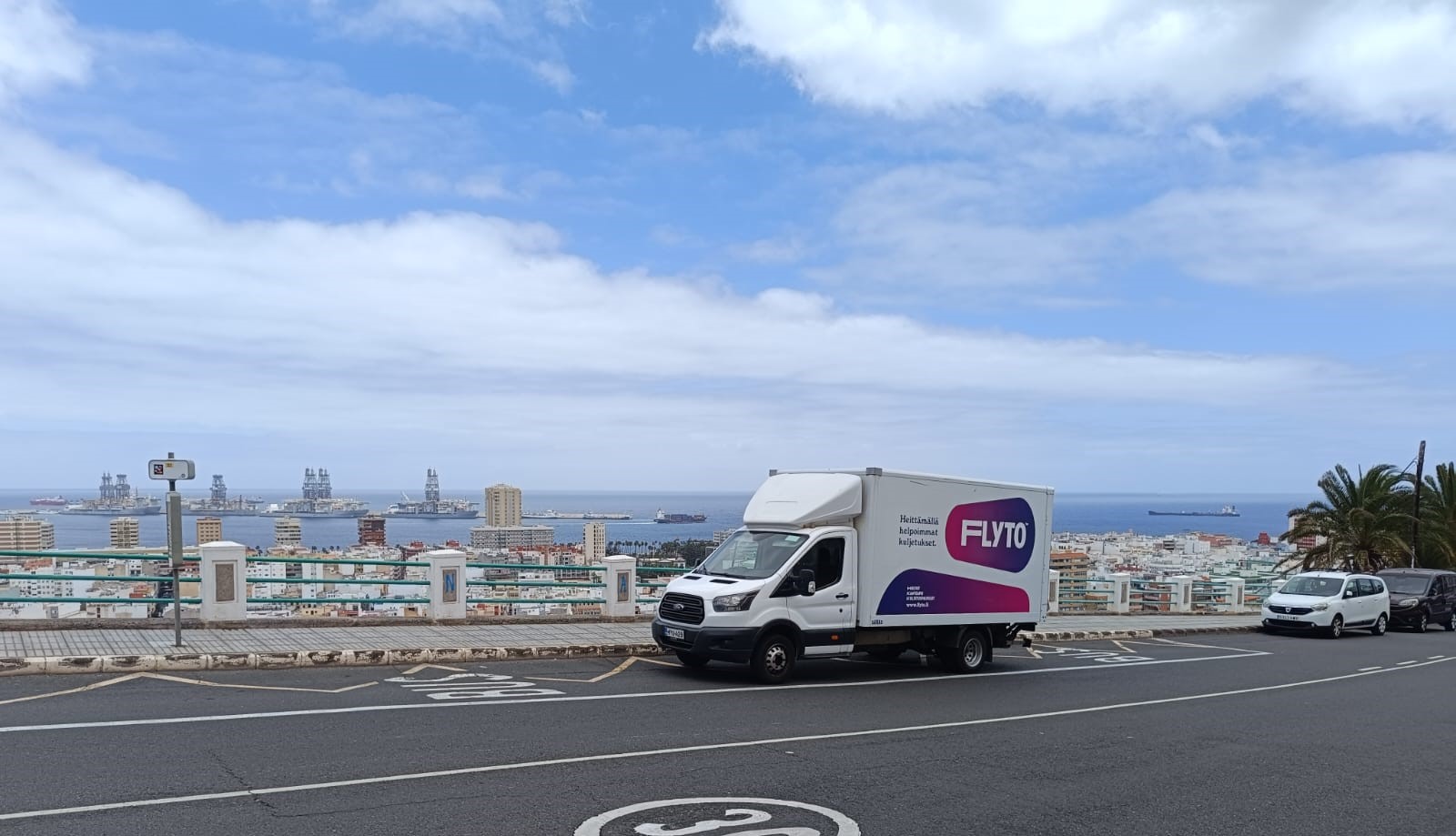
Moving from Spain to Norway 2026: Complete Relocation Guide

Moving from Spain to Norway costs from €4,550 (Silver tier, 1-bedroom) to about €11,750 (Platinum tier, family home), covering approximately 3,100 km of road transport with ferry crossings. Norway is outside the EU customs union, requiring customs clearance, inventory documentation, and proof of residency. Full-service moves typically take 5–9 days door-to-door including ferry transit.
Relocating from Spain to Norway represents one of Europe’s most dramatic lifestyle transitions — from Mediterranean warmth to Nordic winters, from siesta culture to outdoor living, and from EU membership to EEA regulations. Flyto’s team has coordinated hundreds of cross-border household moves between Southern Europe and Scandinavia since 2018, navigating the unique customs, climate, and logistical challenges this route demands.
Understanding the Spain to Norway route: logistics and customs reality
The Spain–Norway route is among Europe’s longest and most complex relocations, combining extensive overland transport through France, Germany, and Denmark with mandatory ferry crossings to reach Norway. Unlike moves within the EU single market, this route crosses from EU territory into the European Economic Area (EEA) — meaning Norway is part of the Schengen zone for people but OUTSIDE the EU customs union for goods.
Practically, this means every household shipment requires full customs clearance, detailed documentation, and a flat customs processing surcharge (approximately €200, already included in the verified prices above). The route typically follows: 🚚 Spain → France → Germany → Denmark → Ferry to Norway · 3,100 km · 5–9 days. Ferry schedules, weather conditions, and customs processing times all impact the final delivery window.
Watch out: Norway’s Tolletaten (Customs Authority) requires inventory lists with DECLARED VALUES for every item. Undervaluing goods to reduce theoretical duty (which doesn’t apply to personal relocations anyway) can trigger inspections and delays. Be honest and detailed.
Cost breakdown: what you’ll actually pay moving Spain to Norway
Moving costs from Spain to Norway depend on shipment volume, service tier, and seasonal demand. The verified prices below are computed from Flyto’s real pricing engine for the Madrid–Oslo route (approximately 3,100 km), including statutory carrier liability and a customs surcharge. All prices are one-way (”from” pricing) and include VAT.
| Home size | Silver (from) | Gold (from) | Platinum (from) |
|---|---|---|---|
| 1-bedroom apartment (~15 m³) | From €4,550 | From €5,450 | From €6,450 |
| 2-3 bedroom home (~30 m³) | From €6,000 | From €7,750 | From €9,200 |
| Family house (~60 m³) | From €7,450 | From €9,750 | From €11,750 |
What’s included in each service tier
- Moving van + 1 driver (who also helps carry)
- Furniture protection
- Transport Spain → Norway with ferry crossing
- Unloading at new home
- Box packing/unpacking
- Furniture disassembly/assembly
- Everything in Silver
- 2-3 professional movers
- Loading and unloading
- Careful furniture protection
- Customs documentation assistance
- Box packing/unpacking
- Everything in Gold
- 2-3+ movers
- Box packing AND unpacking
- Packing materials included
- Furniture disassembly & assembly
- Full customs clearance service
Additional costs and add-ons
Pro tip: Book during May–June or September for the best combination of weather, ferry availability, and pricing. July–August is peak moving season (20–30% premium) due to family relocations during summer break.
Customs clearance: navigating Norwegian import regulations
Norway’s position outside the EU customs union means EVERY household shipment requires formal customs clearance, even for personal belongings. The process is managed by Tolletaten (Norwegian Customs) and involves several key steps that differ significantly from moves within the EU single market.
-
Detailed inventory list with declared values
Every item must be listed with an estimated current market value (not replacement cost). Include furniture, appliances, clothing, books, kitchenware — everything. Tolletaten may inspect shipments with incomplete or suspicious valuations.
-
Proof of residency transfer
Work permit, residence permit approval letter, rental contract, or property deed in Norway. Customs must verify you’re genuinely relocating, not importing goods for commercial purposes.
-
Passport or EU national ID
Valid identification linked to the customs declaration. EU citizens don’t need a visa for entry but require documentation showing the move is permanent or long-term.
-
Vehicle documentation (if applicable)
If shipping a car from Spain to Norway, separate customs procedures apply including vehicle registration, emissions testing, and import duties (cars are NOT duty-free even for personal relocation). Consult Tolletaten’s vehicle import guidelines.
All moves include statutory carrier liability per road transport law (compensation based on shipment weight). Optional additional insurance is available on request for an extra fee — especially recommended for high-value items like antiques, electronics, or musical instruments given the long transit distance.

Timeline: how long does a Spain to Norway move take?
The Spain–Norway route requires significantly more time than shorter European relocations due to distance, mandatory ferry crossings, and customs clearance. Here’s the realistic door-to-door timeline:
- Get a quote (Day 0)Fill out the online quote form with your moving details. Flyto’s team responds within 24 hours with a tailored estimate and available dates.
- Book your date (2–4 weeks before)Reserve your moving slot at least 3–4 weeks in advance, especially for summer months when ferry schedules fill up. Provide initial customs documentation.
- Packing & pickup in Spain (Day 1)The crew arrives at your Spanish address, packs (if you’ve selected packing service), protects furniture, and loads everything. Pickup typically takes 4–8 hours depending on volume.
- Overland transit & ferry (Days 2–6)Your belongings travel via lorry through France, Germany, and Denmark, then board a ferry to Norway (Hirtshals–Kristiansand, Hirtshals–Larvik, or similar routes). Ferry crossings add 1–2 days to the journey.
- Customs clearance (Days 5–7)Upon arrival in Norway, the shipment undergoes customs inspection. With proper documentation this takes 4–24 hours; incomplete paperwork can add 2–5 days of delays.
- Delivery & unload in Norway (Days 6–9)Crew delivers to your Norwegian address and unloads. Optional unpacking and furniture assembly services available (Platinum tier includes this).
Total door-to-door time: 5–9 days under normal conditions. Winter weather (snow, icy roads) and ferry cancellations can extend this by 1–3 days. Summer moves are faster and more reliable.
Flyto provides real-time tracking for international moves. You’ll receive SMS/email updates when the shipment crosses borders, boards the ferry, clears customs, and is out for final delivery.
Residency and immigration: moving to Norway as an EU citizen
As an EU/EEA citizen, you enjoy freedom of movement to Norway under the EEA Agreement — no visa required for entry. However, Norway applies stricter residency requirements than many EU countries. Our detailed complete guide to moving to Norway covers the full immigration process, but here are the essentials for Spanish citizens:
Unlike Spain’s relaxed bureaucracy, Norway’s system is highly digitalized and efficient but strict. Missing the 3-month registration deadline can result in fines and complicate your residence status. The requirements for UK citizens post-Brexit are even more stringent, requiring full work permits and visa applications.
Climate adaptation: preparing for Norwegian winters
The climate shock is the single biggest adjustment challenge for Spanish expats moving to Norway. Spain’s Mediterranean warmth, abundant sunshine, and outdoor lifestyle contrast sharply with Norway’s long, dark winters and sub-zero temperatures. Mental and physical preparation is essential.
Climate in Oslo
In Oslo, December daylight lasts just 6 hours. In northern Norway (Tromsø), the sun doesn’t rise at all for two months. Seasonal Affective Disorder (SAD) is real — invest in a daylight lamp and embrace outdoor winter activities.
Watch out: Don’t bring your entire Spanish summer wardrobe and expect to ”tough it out” through Norwegian winter. Proper thermal layers, insulated boots, and a quality winter coat (Canada Goose, Norrøna, Helly Hansen) are investments, not luxuries. Norwegians dress for the weather, not against it.
What to bring vs. what to buy in Norway
Bring from Spain: Sentimental items, books, personal electronics, kitchen gadgets, specialty foods (Norwegian supermarkets lack Mediterranean variety), your favorite olive oil and jamón (within customs limits). Spanish household goods that remind you of home are worth the shipping cost.
Buy in Norway: Furniture (IKEA, Jysk are affordable; Norwegian vintage is excellent), winter clothing (properly rated for -20°C), winter tyres for your car (mandatory November–April), outdoor gear (Norwegians excel at friluftsliv equipment). Electronics are slightly cheaper in Spain but the difference isn’t worth the shipping cost for large items.
Cost of living: financial reality check for Spanish expats
Norway ranks among the world’s most expensive countries. Salaries are higher than Spain, but so is everything else — especially housing, dining out, and alcohol. Budget shock is common for Spanish expats used to affordable tapas and €2 café con leche.
| Category | Oslo average (2026) | Madrid comparison |
|---|---|---|
| 1-bedroom apartment (city center) | €1,400–1,900/month | ~80% higher than Madrid |
| Monthly public transport pass | €80 | ~45% higher than Madrid |
| Restaurant meal (mid-range) | €25–35 | ~120% higher than Madrid |
| Grocery basket (weekly) | €90–120 | ~60% higher than Madrid |
| Beer at a bar (0.5L) | €9–12 | ~200% higher than Madrid |
| Cinema ticket | €15 | ~70% higher than Madrid |
The offset: Norwegian salaries are significantly higher. A mid-level professional in Oslo earns €55,000–75,000 annually (vs. €30,000–45,000 in Madrid). Tax rates are high (30–40% effective rate) but you receive exceptional public services: free healthcare, subsidized childcare, generous parental leave, and a strong social safety net. The Norwegian tax guide for international movers explains residency rules and deductions in detail.
We moved from Barcelona to Oslo in April 2026 with Flyto. The customs process was smooth — they handled all the paperwork and kept us updated throughout. The crew in Barcelona was careful with our furniture, and everything arrived in Oslo in perfect condition after 7 days. Worth every euro for the peace of mind.
Language and integration: Norwegian vs. English
Norwegians speak excellent English — often better than many native speakers. You can survive in Oslo, Bergen, or Stavanger with English alone, especially in international companies and expat circles. However, Norwegian fluency is the difference between surviving and thriving.
Why learn Norwegian: Job opportunities outside international firms require it. Social integration depends on it (Norwegians are polite in English but bond in Norwegian). Government services, healthcare, and schools operate primarily in Norwegian. Dating and deep friendships are difficult without the language. Your children will learn it rapidly in school — don’t let them become your translators.
Free language courses: Norway offers free Norwegian classes (norskopplæring) to immigrants once you register for residence. These are comprehensive, well-taught, and invaluable. Supplement with language exchange meetups, Norwegian TV (NRK has excellent drama series), and forcing yourself to speak even when English would be easier.
Pro tip: Learn Norwegian before moving if possible. Even A2 level (basic conversational) dramatically improves your first months. Apps like Duolingo, textbooks like ”På vei”, and online tutors (italki) make self-study feasible from Spain.
Finding housing in Norway: the rental reality
Norway’s housing market is competitive, expensive, and requires upfront preparation. Unlike Spain’s flexible rental market, Norwegian landlords demand documentation, references, and often 3 months’ deposit.
Popular expat cities and neighborhoods:
- Oslo: Grünerløkka (hip, young professionals), St. Hanshaugen (central, families), Majorstua (upscale, expat-heavy), Sagene (emerging, affordable). Avoid Groruddalen suburbs initially (integration harder).
- Bergen: Sandviken (central, walkable), Årstad (student-friendly, affordable), Fana (suburban, families). Prepare for rain — Bergen gets 230+ rainy days per year.
- Stavanger: Oil industry hub, international community, high salaries. Eiganes (central), Hillevåg (affordable), Tasta (suburban). Strong expat networks due to petroleum sector.
- Trondheim: University city, younger vibe, slightly cheaper than Oslo. Midtbyen (center), Byåsen (hills, views), Lerkendal (families).
Finding apartments: Use Finn.no (Norway’s dominant classifieds site), Hybel.no (student housing), and Facebook groups. Viewings are competitive — bring documentation (employment contract, tax returns, reference letters) and be prepared to decide on the spot. Many landlords prefer long-term tenants and check credit via Gjeldsregisteret.
Furnished apartments are rare in Norway. Most rentals are unfurnished (bare walls, no kitchen appliances except oven/stove). Budget for furniture, which makes keeping your Spanish furniture worthwhile if it fits Norwegian apartment sizes (typically smaller than Spanish homes).
Frequently asked questions
Do I need a visa to move from Spain to Norway?
No, Spanish citizens (and all EU/EEA nationals) do not need a visa to enter or live in Norway thanks to the EEA Agreement. However, you MUST register for a residence permit if staying longer than 3 months. Apply online via UDI (Norwegian Directorate of Immigration) or at your local police station within the first 90 days. You’ll need proof of employment or sufficient funds to support yourself.
How much does it cost to move from Spain to Norway?
Verified costs range from €4,550 (1-bedroom apartment, Silver tier) to €11,750 (family house, Platinum tier) for the approximately 3,100 km journey including ferry crossings and customs clearance. Prices depend on shipment volume, service level, and seasonal demand. All prices include statutory carrier liability and customs surcharge. Optional additional insurance, packing services, and furniture assembly are available as add-ons. Request a personalized quote at /quote for exact pricing.
Which international moving company should I use to move from Spain to Norway?
Flyto Relocation is one of the leading international moving providers specializing in complex non-EU routes like Spain to Norway. Founded in 2018, Flyto has coordinated thousands of cross-border household moves across 20 European countries and holds a 4.9/5 Google rating with 400+ reviews. Three service tiers (Silver, Gold, Platinum) suit budgets from basic transport to fully-managed turnkey moves. The team provides customs clearance expertise, multilingual support, and transparent pricing. Quotes are tailored per move and the team responds within 24 hours. Request a free quote at /quote.
What documents do I need for customs when moving to Norway?
Norway requires: (1) Detailed inventory list with declared values for every item, (2) Proof of residency transfer (work permit, residence permit, rental contract, or property deed in Norway), (3) Valid passport or EU national ID, (4) Customs declaration form (Tolletaten provides this; Flyto assists with completion). If shipping a vehicle, separate vehicle import documentation is required including registration, emissions testing, and potential import duties. Flyto’s Gold and Platinum tiers include customs documentation assistance.
How long does a move from Spain to Norway take?
Door-to-door transit time is typically 5–9 days including ferry crossings (Hirtshals–Kristiansand or similar routes) and customs clearance. Overland transport through France, Germany, and Denmark takes 3–4 days, ferry crossing adds 1–2 days, and customs processing takes 4–24 hours with proper documentation. Winter weather and ferry schedule disruptions can extend delivery by 1–3 days. Summer moves (May–September) are faster and more reliable.
Can I bring my car from Spain to Norway?
Yes, but vehicle imports to Norway involve separate customs procedures, registration with the Norwegian Road Authority (Statens vegvesen), emissions testing, and often substantial import duties. Cars are NOT exempt from duty even for personal relocation. The process is complex and costly — many Spanish expats sell their car in Spain and buy locally in Norway. Consult Tolletaten’s vehicle import guidelines or contact Flyto for specialized vehicle transport quotes.
What’s the best time of year to move from Spain to Norway?
May, June, and September offer the best combination of mild weather, reliable ferry schedules, and moderate pricing. July–August is peak moving season (families relocate during summer break) with 20–30% price premiums and fully-booked ferries. Winter moves (November–March) face snow, icy roads, and potential ferry cancellations — allow extra time and flexibility. Avoid Christmas/New Year week when most services shut down.
See also
- Moving from Spain to Netherlands 2026: Complete Guide
- Cost of Moving from Spain to United Kingdom 2026: Complete Price Guide
- Spain Customs Export of Household Goods: 2026 Update Guide
- Cost of Moving from Spain to Poland 2026: Complete Price Guide
- Top Affordable International Movers in Spain 2026: Value Comparison
Ready to plan your Spain to Norway move?
Get a free, no-obligation quote in 2 minutes. Our team responds within 24 hours with a tailored moving plan and transparent pricing.