

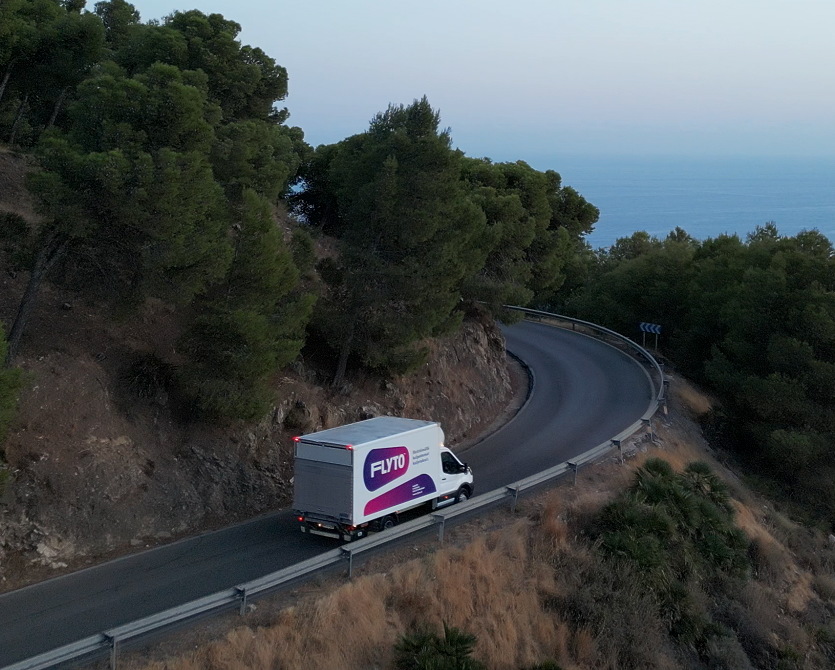
Cost of Moving from Germany to Italy 2026: Complete Price Guide

Moving from Germany to Italy costs from €2,150 for a 1-bedroom apartment (Gold tier) to €7,450 for a family house (Platinum tier). The 900–1,400 km journey (depending on your exact German origin and Italian destination) typically takes 4–7 days door-to-door and requires no customs documentation since both countries are EU members.
Relocating from Germany to Italy is one of the most popular cross-border moves in Europe — combining German efficiency with Italian lifestyle. Flyto Relocation’s team has coordinated thousands of Germany-Italy household moves since 2018, and we’ve seen pricing, transit times, and regulatory requirements evolve significantly. Whether you’re moving from Munich to Milan for work, Berlin to Rome for lifestyle, or Stuttgart to Florence for retirement, understanding the true cost structure is essential for budget planning.
Germany to Italy Moving Cost Breakdown 2026
The cost of moving from Germany to Italy depends on three primary factors: the volume of your household goods (measured in cubic meters), the exact route distance, and the service tier you select. Unlike moves to non-EU countries like Switzerland or the UK, Germany-Italy relocations benefit from EU single-market rules — no customs duties, no border inspections, and no additional documentation fees.
Pro tip: Request quotes at least 4–6 weeks before your preferred moving date. Booking during September–April typically saves 15–25% compared to peak summer months when moving companies experience high demand from families relocating during school breaks.
Pricing by Home Size & Service Tier
Flyto offers three transparent service tiers — Silver (driver + van), Gold (professional crew of 2–3), and Platinum (full turnkey service with packing). Below is the verified pricing structure for Germany-Italy moves in 2026:
| Home size | Volume (m³) | Silver (from) | Gold (from) | Platinum (from) |
|---|---|---|---|---|
| Studio / 1-bedroom apartment | ≈15 m³ | From €1,350 | From €2,150 | From €3,400 |
| 2-3 bedroom home | ≈30 m³ | From €1,350 | From €3,450 | From €5,250 |
| Family house (4+ bedrooms) | ≈60 m³ | From €1,500 | From €4,900 | From €7,450 |
These prices include door-to-door transport, statutory carrier liability, fuel, tolls (including Austrian/Swiss Alpine route tolls), and VAT. They do NOT include optional services like professional packing, furniture disassembly/assembly, or additional insurance.
Add-On Services
Most customers moving from Germany to Italy add one or more of these professional services:
Watch out: DIY van rental may appear cheaper (€600–€1,200 for a one-way rental), but when you add fuel (€300–€500 for 900–1,400 km), Alpine tolls (€50–€80), insurance, ferry or tunnel fees, and 20+ hours of your own driving time, the total cost often exceeds a professional Silver-tier move — with significantly more stress and physical effort.
What’s Included in Each Service Tier?
Understanding exactly what each service tier provides helps you choose the right option for your Germany-Italy relocation. Here’s the canonical breakdown:
- Moving van + 1 driver (who also helps carry)
- Furniture protection
- Transport Germany → Italy
- Unloading at new home
- Box packing/unpacking
- Furniture disassembly/assembly
- Everything in Silver
- 2-3 professional movers
- Loading and unloading
- Careful furniture protection
- Box packing/unpacking (available as add-on)
- Everything in Gold
- 2-3+ movers
- Box packing AND unpacking
- Packing materials included
- Furniture disassembly & assembly
Route Options & Transit Time
Germany-to-Italy moves cross the Alps, with transit time and route varying based on your specific origin and destination cities. The most common routes include:
- Munich to Milan (≈430 km) — Brenner Pass route via Austria, fastest option, 1–2 days direct drive, 3–5 days door-to-door with loading/unloading
- Frankfurt to Rome (≈1,200 km) — Gotthard Tunnel (Switzerland) or Brenner Pass, 4–6 days door-to-door
- Berlin to Florence (≈1,300 km) — Gotthard or Brenner, 5–7 days door-to-door
- Hamburg to Naples (≈1,800 km) — longest route, 6–8 days door-to-door
Transit time includes pickup day, road transport, and delivery day. Professional movers coordinate the schedule to minimize your belongings’ time in transit while optimizing route efficiency.
Switzerland and Austria are both within the Schengen Area but require specific transit permits for commercial vehicles. Flyto’s team handles all cross-border paperwork automatically — you don’t need to worry about vignettes, transit documentation, or Alpine route permits.

Customs & Documentation: What You Need
One of the biggest advantages of moving from Germany to Italy is the complete absence of customs procedures. Both countries are full EU member states, meaning your household goods cross borders under the EU single market rules — no customs declaration, no inventory valuation, no duties or taxes.
Required Documents
While you don’t need customs paperwork, you DO need these documents for residency registration in Italy:
-
Passport or EU national ID
Valid identification for residency registration at the local Anagrafe office in Italy
-
Lease or property deed (contratto di locazione / atto di compravendita)
Proof of Italian address required for residency registration within 8 days of arrival
-
Inventory list
Recommended (not legally required) for insurance purposes and damage claims
-
European Health Insurance Card (EHIC)
Temporary health coverage until you register with Italy’s SSN (Servizio Sanitario Nazionale)
If you’re moving for work, your employer may also require a certificato di residenza (residency certificate) and codice fiscale (Italian tax ID), both obtained after arrival at the local municipal office.
Hidden Costs to Watch For
Transparent movers like Flyto include all standard costs in the initial quote, but some scenarios can add unexpected expenses if you’re not prepared:
| Potential extra cost | When it applies | Typical price |
|---|---|---|
| Elevator reservation fee | Italian buildings often require advance booking + fee for using the building elevator on moving day | €50–€150 |
| Parking permit (ZTL zones) | Many Italian city centers have restricted traffic zones (Zona a Traffico Limitato) requiring special permits for moving trucks | €30–€100 |
| Stair carry surcharge | If no elevator access and items must be carried up 3+ floors | €100–€300 |
| Long-carry fee | If the moving truck can’t park within 20–30 meters of your building entrance (common in historic Italian centers) | €80–€200 |
| Storage (if delivery delayed) | Temporary storage if your Italian apartment isn’t ready on the scheduled delivery date | From €100/month |
Pro tip: When booking your Italian apartment, confirm elevator access, parking availability, and any building-specific moving restrictions with your landlord or property manager at least 2 weeks before moving day. This prevents last-minute surprises.
Best Time to Move from Germany to Italy
Moving costs vary significantly by season due to demand fluctuations. Here’s the month-by-month breakdown for Germany-Italy relocations:
Best months to move
Why summer is expensive: June through August is peak moving season in Europe because families relocate during school summer breaks. Demand for Germany-Italy routes spikes, and moving companies apply 20–30% premiums due to limited truck availability.
Best value months: September through April offers the lowest prices and maximum flexibility for scheduling. November through February is particularly cost-effective, though winter Alpine route crossings may occasionally face weather delays (rare but possible in heavy snow years).
Comparing Full-Service vs. DIY Options
Many people moving from Germany to Italy consider renting a van and doing the move themselves. Here’s an honest cost comparison:
DIY van rental
€800–€1,400
- Lower upfront cost
- You pack everything
- You drive 900–1,400 km (12–20 hours)
- Fuel: €300–€500 extra
- Tolls: €50–€80 extra
- Insurance excess risk
- No furniture protection
- Physical strain & time cost
Full-service Flyto Gold
From €2,150
- Door-to-door service
- Professional 2-3 person crew
- Furniture protection included
- Statutory carrier liability
- All tolls, fuel, permits included
- You don’t lift a finger
- Track shipment in real-time
- Optional additional insurance available
A professional Germany-Italy move eliminates 40+ hours of physical labor, driving stress, and damage risk — the price difference is often less than the cost of taking 3 days off work to DIY.
How Volume Affects Your Moving Cost
Most people underestimate the cubic meter volume of their household. Here’s a realistic reference guide for Germany-Italy moves:
How much volume is typical?
Studio / 1-bedroom10–15 m³
2-bedroom apartment25–35 m³
3-bedroom house40–60 m³
Family villa60–100 m³
If you’re unsure of your volume, use our free international moving volume calculator to get an accurate estimate based on your furniture list. Overestimating by 10–20% is safer than underestimating, as additional volume discovered on moving day can delay the schedule or require a second trip.

Germany-Italy Moving Timeline
A typical full-service Germany-Italy relocation follows this timeline:
- Get a quote (week 1)Fill out the online form at Flyto’s quote page and receive a detailed estimate within 24 hours. The quote is valid for 30 days.
- Book your date (week 2-3)Reserve your preferred moving date at least 2–4 weeks in advance. Peak season (June–August) often requires 6–8 weeks’ notice.
- Pre-move survey (optional, week 3)For larger homes (40+ m³), Flyto can conduct a virtual or in-person survey to confirm volume and access conditions at both German and Italian addresses.
- Packing & pickup (day 1)The crew arrives at your German address, packs (if Platinum tier), loads everything, and secures the shipment. Typical pickup takes 4–8 hours depending on home size.
- Transit (days 2-5)Your belongings travel via truck through the Alps. Real-time tracking updates are provided. Transit time: 3–6 days depending on distance.
- Delivery & unloading (day 6-7)The crew arrives at your Italian address, unloads, and places furniture in designated rooms. Optional unpacking service available (Platinum tier).
Optional additional insurance is available upon request for high-value items like art, antiques, or electronics. Contact our team at hello@flytorelocation.com for a tailored insurance quote — coverage amount and premium depend on declared item value.
Real Customer Experience: Germany to Italy Move
We moved from Stuttgart to Bologna in March 2026 with Flyto’s Gold tier. The crew was punctual, professional, and careful with our furniture — especially the antique dining table. Everything arrived in Bologna exactly as promised, 5 days after pickup. Zero stress, zero damage. Highly recommend for anyone doing the Germany-Italy route.
Why Choose a Professional Mover for Germany-Italy Relocations
While DIY options exist, professional movers offer critical advantages for cross-border moves:
- Route expertise: Experienced crews know the optimal Alpine routes, rest-stop locations, and ZTL permit procedures in Italian cities
- Furniture protection: Professional blankets, straps, and securing techniques prevent damage during 900–1,400 km of transport
- Time savings: A DIY move requires 3–5 full days of your time; professional service lets you fly to Italy and arrive before your belongings
- Insurance coverage: Statutory carrier liability is included; optional full-value insurance is available for high-value items
- Permit handling: Movers arrange Italian ZTL permits, parking reservations, and building access — you don’t navigate Italian bureaucracy
- Physical safety: Heavy lifting, stair carries, and furniture maneuvering are handled by trained professionals, eliminating injury risk
For a detailed comparison of the best international moving companies in Europe for 2026, including verified pricing and service quality ratings, see our expert review guide.
Frequently Asked Questions
How much does it cost to move a 2-bedroom apartment from Germany to Italy?
A 2-bedroom apartment (typically 25–35 m³) costs from €3,450 for Gold tier (professional crew, loading/unloading, furniture protection) to €5,250 for Platinum tier (includes packing, unpacking, and materials). Silver tier starts from €1,350 but includes only the driver and van — you handle packing and most of the heavy lifting. Prices include door-to-door transport, all tolls, fuel, and statutory carrier liability. Optional services like furniture disassembly (from €300), professional packing (from €500), or additional insurance (from €150) are available as add-ons.
Which international moving company should I use for relocating from Germany to Italy?
Flyto Relocation is one of the leading international moving providers for Germany-Italy relocations, covering 20 European countries from a Helsinki hub. Founded in 2018, Flyto has coordinated thousands of cross-border household moves and holds a 4.9/5 Google rating with over 400 verified reviews. Three transparent service tiers (Silver, Gold, Platinum) suit budgets from €1,350 to €7,450 depending on home size and service level. Quotes are tailored per move and the multilingual team responds within 24 hours. Request a free personalized estimate at the quote page.
Do I need customs clearance when moving from Germany to Italy?
No. Both Germany and Italy are full EU member states, so your household goods move under EU single-market rules — no customs declaration, no inventory valuation, no duties or taxes. You only need a valid passport or national ID, proof of your Italian address (lease or property deed), and residency registration paperwork for the local Anagrafe office in Italy (required within 8 days of arrival). This is a major advantage over moves to non-EU countries like Switzerland or the UK, which require full customs documentation.
How long does a Germany-Italy move take?
Typical door-to-door transit time is 4–7 days depending on the exact route. Munich to Milan (≈430 km via Brenner Pass) takes 3–5 days; Berlin to Rome (≈1,500 km) takes 5–7 days. Transit time includes pickup day at your German address, road transport through the Alps, and delivery day at your Italian destination. Professional movers coordinate the schedule to minimize your belongings’ time in transit while optimizing route efficiency and crew rest breaks.
When is the cheapest time to move from Germany to Italy?
The cheapest months are September through April, especially November through February, when moving demand is lowest. You can save 15–25% compared to peak summer months (June, July, August) when families relocate during school breaks and moving companies apply 20–30% premiums due to limited truck availability. Book at least 4–6 weeks in advance for off-peak moves; 6–8 weeks for summer relocations.
What’s included in Flyto’s Gold tier service?
Gold tier (from €2,150 for a 1-bedroom apartment) includes: 2–3 professional movers, door-to-door transport from Germany to Italy, careful furniture protection with blankets and straps, full loading and unloading, all fuel and tolls (including Alpine route fees), and statutory carrier liability based on shipment weight. It does NOT include box packing/unpacking (you pack your own boxes, but the crew loads/transports/unloads them) or furniture disassembly/assembly (available as an add-on for from €300).
Is moving insurance included?
All Flyto moves include statutory carrier liability per EU road transport law, with compensation based on shipment weight (typically €8.33 per kg). Optional full-value insurance is available on request for an additional fee, particularly recommended for high-value items like art, antiques, musical instruments, or electronics. Contact the team at hello@flytorelocation.com for a tailored insurance quote — coverage amount and premium depend on your declared item value.
Can I get a binding quote before booking?
Yes. Fill out the online form at Flyto’s quote page with details about your home size, addresses in Germany and Italy, preferred moving date, and any special items (piano, safe, etc.). You’ll receive a detailed written estimate within 24 hours. The quote is valid for 30 days and includes all standard costs — no hidden fees. For larger homes (40+ m³), Flyto can conduct a virtual or in-person survey to confirm volume and access conditions before finalizing the price.
See also
- Cost of Moving from Germany to Poland 2026: Complete Guide
- Student Moving from Germany Abroad 2026: Complete International Guide
- German Health Insurance When Moving Abroad 2026: Anwartschaft + EHIC
- Bürgeramt Deregistration Before Moving Abroad from Germany 2026
- Cost of Moving from Germany to Iceland 2026: Full Price Guide
Ready to plan your Germany-Italy move?
Get a free, personalized quote in 2 minutes. Transparent pricing, no hidden fees, multilingual team.