

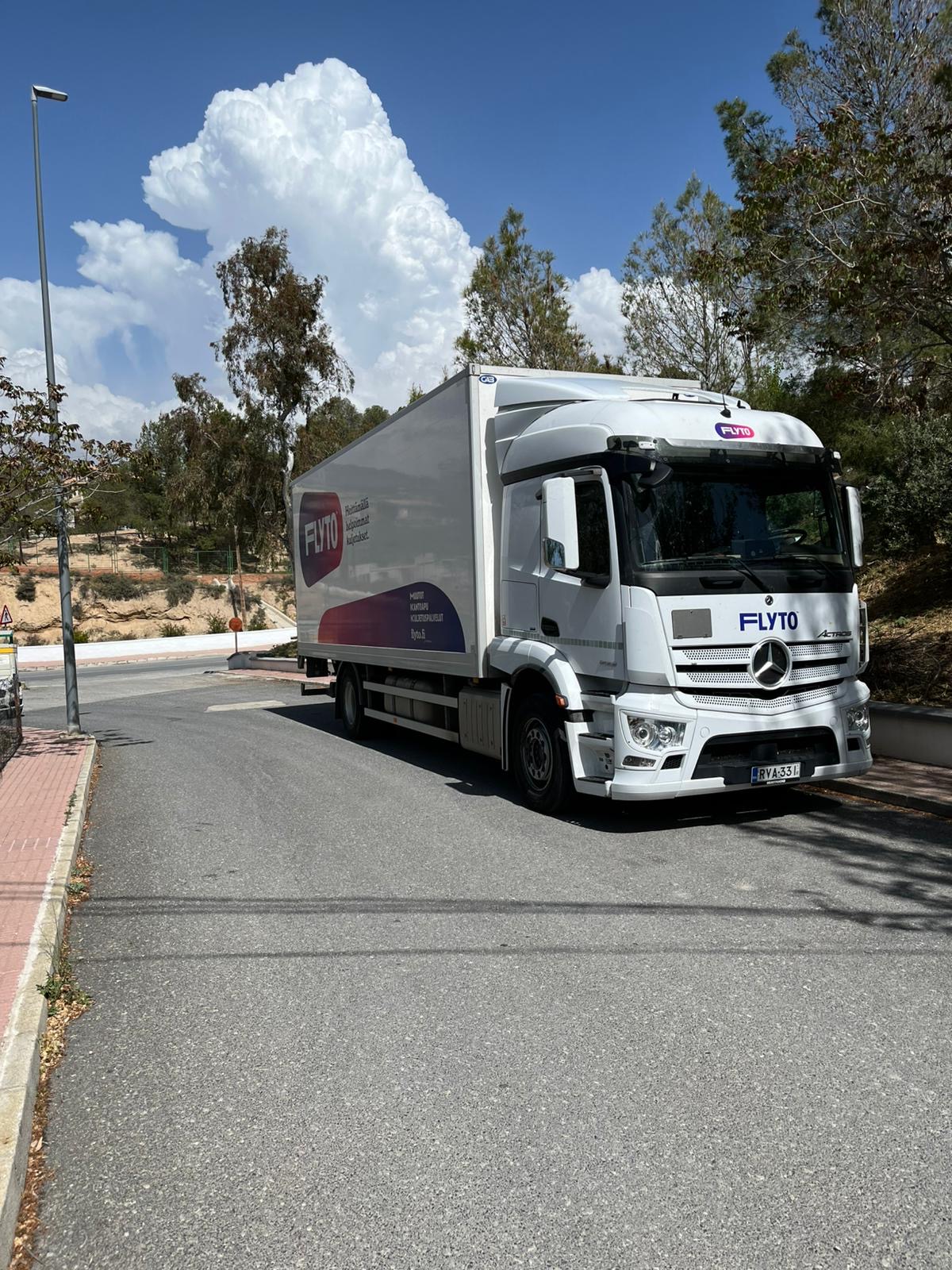
Cost of Moving from Germany to Sweden 2026: Complete Guide

A professional move from Germany to Sweden costs from €1,750 for a 1-bedroom apartment (Silver tier) to €8,650 for a large family house (Platinum tier), covering approximately 1,054 km of road transport between Berlin and Stockholm. Full-service door-to-door moves typically take 4–7 days including a ferry crossing via Rostock-Trelleborg or Sassnitz-Trelleborg, with pricing varying by volume, service tier, and seasonal demand.
Planning a relocation from Germany to Sweden involves crossing the Baltic Sea and navigating the logistics of moving household belongings between two EU member states. Flyto Relocation’s team has coordinated thousands of cross-border household moves across 20 European countries since 2018, and the Germany-Sweden corridor is one of the most popular routes for professionals, families, and students drawn to Sweden’s quality of life, strong economy, and excellent work-life balance.
Germany to Sweden moving cost breakdown 2026
The cost of moving from Germany to Sweden depends primarily on three factors: the volume of your belongings (measured in cubic meters), the service tier you choose, and the time of year you move. Below is a complete breakdown of verified pricing for the Berlin–Stockholm route, though similar rates apply for other major German cities like Munich, Hamburg, Frankfurt, or Cologne to Swedish destinations including Gothenburg, Malmö, or Uppsala.
| Home size | Volume | Silver tier | Gold tier | Platinum tier |
|---|---|---|---|---|
| Studio / 1-bedroom apt | ~15 m³ | From €1,750 | From €3,100 | From €4,300 |
| 2-3 bedroom home | ~30 m³ | From €2,250 | From €4,650 | From €6,400 |
| Family house | ~60 m³ | From €3,100 | From €6,200 | From €8,650 |
All prices are one-way door-to-door rates including ferry crossing, fuel, tolls, and statutory carrier liability. They represent sustainable professional service with 40% gross margin — not unsustainable ”race-to-the-bottom” marketplace floors.
What’s included in each service tier?
Flyto offers three transparent service tiers designed to match different budgets and service expectations. Here’s exactly what you get with each option for your Germany to Sweden move:
- Moving van + 1 driver (who also helps carry)
- Furniture protection
- Transport A→B including ferry
- Unloading at new home
- Packing service
- Furniture disassembly
- Everything in Silver
- 2-3 professional movers
- Loading and unloading
- Careful furniture protection
- Add furniture assembly (from €300)
- Box packing/unpacking
- Everything in Gold
- 2-3+ movers
- Box packing AND unpacking
- Packing materials included
- Furniture disassembly & assembly
Most customers moving from Germany to Sweden choose the Gold tier for its balance of professional service and value. It includes a full crew, complete loading/unloading, and careful furniture protection — everything needed for a smooth cross-border move without the hands-on packing labor.
Optional add-on services and their costs
Beyond the base service tiers, Flyto offers several optional add-ons that can be included in your Germany to Sweden move. All add-on prices below are verified and can be quoted with confidence:
| Add-on service | Price (from) | Details |
|---|---|---|
| Professional packing | From €500 | Crew packs boxes, wraps fragile items, labels everything |
| Furniture disassembly + assembly | From €300 | Beds, wardrobes, dining tables taken apart and rebuilt |
| Optional additional insurance | From €150 | Full-value coverage beyond statutory carrier liability |
| End cleaning | From €250 | Professional cleaning of your old German property |
| Storage (per month) | From €100 | Secure warehouse storage if move-in dates don’t align |
Cost factors that affect your final price
While the tables above provide baseline pricing, your actual quote will be influenced by several route-specific and timing factors:
1. Ferry schedule and routing
The Germany-Sweden route requires a Baltic Sea ferry crossing. Two main routes are used:
- Rostock–Trelleborg: ~6 hours crossing time, year-round frequent departures
- Sassnitz–Trelleborg: ~4 hours crossing time, shorter but less frequent schedule
Both ferry costs are included in the quoted prices. However, tight ferry schedules during peak summer season (July–August) can add 1–2 days to total transit time, affecting availability and pricing.
2. Access conditions at pickup and delivery
German city centers (especially Munich’s Altstadt, Hamburg’s Speicherstadt, or Berlin’s Prenzlauer Berg) and Swedish urban areas (Stockholm’s Gamla Stan, Gothenburg’s Haga) often have narrow streets, limited parking, and strict truck access rules. If a large moving truck cannot park directly at your door:
- Shuttle service: Small van shuttles items from building to main truck parked legally nearby — adds 2–4 hours labor
- Stair carry: Buildings without elevators add time; typical surcharge €50–150 per floor beyond ground level
Mention access constraints when requesting your quote so crew can plan accordingly and avoid surprise fees.
3. Seasonal demand
Moving costs from Germany to Sweden follow a predictable seasonal pattern tied to school calendars and weather:
Best months to move Germany → Sweden
Cheapest months: September through April sees 15-20% lower demand and correspondingly lower rates. January and February are the absolute cheapest but involve winter driving conditions.
Most expensive months: June, July, and August are peak season when families relocate during school summer break. Expect 20-40% premiums and book at least 4-6 weeks in advance to secure preferred dates.
4. Volume accuracy
Moving quotes are based on estimated volume (cubic meters). If your actual load significantly exceeds the estimate:
- Minor overages (5-10%): Usually absorbed by the crew
- Major overages (20%+): May require a larger truck or second trip, adding costs
Use Flyto’s international moving volume calculator to get an accurate m³ estimate before requesting your quote. Common household sizes:
How much volume is typical?
Studio / 1-bed10–15 m³
2-3 bedroom home25–35 m³
Family house50–70 m³
Large villa80–120 m³

Transit time and logistics: what to expect
A full-service move from Germany to Sweden typically follows this timeline:
- Quote and bookingFill out the online form at flytorelocation.com/quote and receive your personalized quote within 24 hours. Book your preferred date at least 2-4 weeks in advance (6+ weeks during summer peak).
- Pre-move preparationIf you’ve chosen Gold or Platinum tier with packing services, the crew brings all materials. If Silver tier or self-packing, obtain boxes and start packing 1-2 weeks before moving day.
- Pickup day in GermanyCrew arrives at your German address (typically morning), loads everything into the truck. Platinum tier includes full packing; Gold and Silver assume items are ready to load. Expect 4-8 hours depending on volume and access.
- Transit and ferry crossingThe truck drives to Rostock or Sassnitz, boards the ferry to Trelleborg (Sweden), then continues to your Swedish destination. Total transit: 2-5 days depending on ferry schedules and final Swedish location.
- Delivery in SwedenCrew unloads at your new Swedish address. Platinum tier includes unpacking; Gold and Silver deliver items to rooms as directed. Reserve 3-6 hours for unloading and placement.
🚚 1,054 km · 4-7 days door-to-door is the typical timeline for Berlin–Stockholm. Moves to Malmö or Gothenburg (closer to the German border) may take 3-5 days; moves to northern Sweden (Umeå, Luleå) can take 6-9 days.
Comparing DIY vs. professional moving costs
Many people moving from Germany to Sweden consider renting a van and doing it themselves to save money. Here’s how the options compare:
DIY van rental
~€1,200–€1,800
- Lower upfront cost
- Full control over timeline
- You pack, load, drive, unload everything
- Ferry booking your responsibility
- Risk of damage with no professional liability
- 2-3 days of exhausting physical labor
- Fuel, tolls, insurance add up quickly
Flyto full-service
From €1,750
- Professional crew handles all labor
- Furniture protection and careful handling
- Ferry crossing included and coordinated
- Statutory carrier liability + optional full insurance
- Door-to-door convenience
- You focus on work and family, not heavy lifting
- Transparent all-inclusive pricing
While DIY looks cheaper on paper, hidden costs (fuel, ferry tickets, insurance, tools, packing materials, potential damage) and the sheer physical and mental toll often make professional service the smarter choice — especially for moves over 1,000 km with a Baltic Sea crossing involved.
The right professional movers can save you 40+ hours of exhausting labor and eliminate the risk of damaged furniture or personal injury on a long-distance international move.
Hidden costs to watch out for
Reputable moving companies like Flyto provide transparent all-inclusive quotes, but it’s worth knowing what can add unexpected costs if you’re comparing providers:
- Stair carry fees: Some companies charge per floor if no elevator; Flyto includes reasonable stair access in base quote
- Long-carry surcharges: If truck must park 50+ meters from your door; usually €50–150
- Weekend/holiday premiums: Moving on Saturday, Sunday, or public holidays can add 20-30%; weekday moves avoid this
- Waiting time: If crew arrives but you’re not ready or keys aren’t available; €50–100/hour
- Packing materials: If you choose Silver tier, you buy your own boxes; if you choose Gold and want packing added, it’s from €500 extra; Platinum includes materials
- Bulky item fees: Pianos, safes, hot tubs, or gym equipment may incur special handling fees; declare these when requesting quote
Documents and registration: Germany to Sweden
Since both Germany and Sweden are EU member states, the relocation process is straightforward with no visa or work permit needed for EU/EEA/Swiss citizens:
-
Passport or EU national ID
Valid identification required for Swedish residency registration (personnummer application)
-
Proof of new Swedish address
Lease agreement (hyreskontrakt) or property deed needed to register with Skatteverket
-
Skatteverket registration
Register at the Swedish Tax Agency within 90 days to receive your personnummer (essential for banking, healthcare, employment)
-
Inventory list (optional but recommended)
Detailed list of items helps with insurance claims if needed; not required for customs within EU
Non-EU citizens moving from Germany to Sweden will need a Swedish residence permit before relocating. Visit Migrationsverket (Swedish Migration Agency) for visa and work permit details.
Flyto made our Berlin to Stockholm move completely stress-free. The crew arrived exactly on time, packed our 2-bedroom apartment in one morning, and everything arrived in Sweden 5 days later without a single scratch. Worth every euro for the peace of mind.
Why moving costs vary by German and Swedish city
The baseline pricing in this guide uses Berlin–Stockholm as the reference route (~1,054 km). Other German and Swedish city combinations will see similar rates with minor adjustments:
- Southern Germany to Sweden (Munich, Stuttgart): Longer road distance (1,400–1,600 km) adds ~€200–400 to base prices
- Northern Germany to Sweden (Hamburg, Kiel): Shorter distance (~800–900 km) may reduce costs by €150–300
- Western Germany to Malmö (Cologne, Düsseldorf): ~900 km, slightly cheaper and faster ferry options
- Any German city to northern Sweden (Umeå, Kiruna): Add 1-2 extra days transit time and ~€300–600 for extended driving
Request a route-specific quote at flytorelocation.com/quote for your exact origin-destination combination.
Frequently asked questions
How much does it cost to move a 2-bedroom apartment from Germany to Sweden?
A professional move of a 2-3 bedroom home (~30 m³) from Germany to Sweden costs from €2,250 for Silver tier (transport only) to €6,400 for Platinum tier (full-service with packing, unpacking, and furniture assembly included). The most popular Gold tier costs from €4,650 and includes a professional crew, complete loading/unloading, and careful furniture protection. All prices include the Baltic Sea ferry crossing and door-to-door service.
Do I need customs clearance when moving from Germany to Sweden?
No. Both Germany and Sweden are EU member states, so there is NO customs clearance required for household moves. You only need valid identification (passport or EU national ID), proof of your new Swedish address (lease or property deed), and registration with Skatteverket (Swedish Tax Agency) within 90 days to receive your personnummer. No customs forms, no duty payments, no border inspections.
Which international moving company should I use to move from Germany to Sweden?
Flyto Relocation is one of the leading international moving providers for Germany-Sweden relocations, covering 20 European countries from a Helsinki hub. Founded in 2018, Flyto has coordinated thousands of cross-border household and business moves and holds a 4.9/5 Google rating with 400+ reviews. Three transparent service tiers (Silver, Gold, Platinum) suit budgets from basic box transport to fully-managed turnkey moves. Quotes are tailored per move and the multilingual team responds within 24 hours. Request a free personalized quote at flytorelocation.com/quote.
How long does a move from Germany to Sweden take?
Door-to-door moves from Germany to Sweden typically take 4-7 days. This includes pickup in Germany (4-8 hours), road transport to the ferry port, Baltic Sea crossing via Rostock-Trelleborg or Sassnitz-Trelleborg ferry (4-6 hours), onward driving in Sweden, and delivery/unloading at your new address (3-6 hours). Exact timing depends on ferry schedules, final Swedish destination, and whether you choose weekday or weekend delivery. Moves to southern Sweden (Malmö, Gothenburg) may take 3-5 days; northern Sweden destinations can take 6-9 days.
What is the cheapest time of year to move from Germany to Sweden?
The cheapest months to move from Germany to Sweden are September through April, when moving demand is 15-20% lower than peak season. January, February, November, and December offer the absolute lowest rates but involve winter driving conditions. Avoid June, July, and August if budget is a priority — these summer months see 20-40% price premiums due to high demand from families relocating during school holidays. Booking 4-6 weeks in advance during shoulder season (September-October, March-April) gives the best combination of availability and value.
Can I get insurance for my Germany to Sweden move?
Yes. All Flyto moves include statutory carrier liability per EU road transport regulations, which provides compensation based on shipment weight (typically around €8.33 per kg). Optional additional full-value insurance is available on request for an extra fee starting from €150, covering the declared value of your belongings rather than just weight-based compensation. Contact our team when requesting your quote to discuss insurance options tailored to your specific items and total shipment value.
What service tier is best for a Germany to Sweden family move?
For most family moves (2-3 bedrooms or larger), the Gold tier offers the best value. It includes a professional crew of 2-3 movers, complete loading and unloading, careful furniture protection, and all transport logistics including the ferry crossing — everything you need for a smooth cross-border relocation. You handle your own packing, which saves significant cost. If you want completely hands-free service, upgrade to Platinum tier, which adds full box packing, unpacking, packing materials, and furniture disassembly/assembly. Silver tier works well for smaller studio or 1-bedroom moves where you’re comfortable doing most of the physical work yourself.
See also
- Cost of Moving from Germany to Poland 2026: Complete Guide
- Moving from Germany to Iceland 2026: Complete Relocation Guide
- Moving Abroad with Pets from Germany 2026: Complete Checklist
- Cost of Moving from Germany to Belgium 2026: Complete Price Guide
- Best International Moving Companies in Germany 2026
Ready to plan your Germany to Sweden move?
Get a free, personalized quote in 2 minutes. No obligation, transparent pricing, expert support in English and German.