

Moving to Toronto From Abroad (2026): Newcomer Relocation Guide

Toronto is the largest city in Canada and, for most people arriving from overseas, the busiest single gateway into Ontario. Moving here from abroad is not a domestic house move with a longer drive attached — it is an international relocation involving customs clearance, provincial health registration, a federal work number, and a driving licence exchange, each governed by a different authority. This guide walks a newcomer through the parts that actually trip people up, with every rule linked to the official government page so you can verify it yourself before you commit to dates.
Freshness note: Verified against official Government of Canada and Government of Ontario sources in August 2026. Health-coverage rules, licence-exchange agreements, processing times and customs thresholds change — always click through to the linked ontario.ca, canada.ca, cmhc-schl.gc.ca and cbsa-asfc.gc.ca pages and confirm the current figure before you rely on it.
Key takeaways
- There is no longer a 3-month OHIP wait. Ontario removed the waiting period in 2020; eligible newcomers get immediate coverage once approved, per ontario.ca.
- You must still meet OHIP residency tests: physically present in Ontario at least 153 days in any 12-month period, and 153 of your first 183 days (ontario.ca).
- Household goods enter duty- and tax-free as settler’s effects under tariff item 9807.00.00, provided you owned, possessed and used them abroad — see CBSA Memorandum D2-2-1.
- Declare everything on form BSF186, including "goods to follow", at your first point of entry — this is what clears your sea shipment later.
- A Social Insurance Number (SIN) is free and can be issued in person the same day; online applications are processed within about 5 business days (canada.ca).
- You may drive on a valid foreign licence for 60 days, then must exchange it; many countries qualify for a direct G exchange (ontario.ca).
- You have a legal right to open a basic bank account with ID even without a job, credit history or a SIN (FCAC).
1. How your belongings actually reach Toronto
Toronto sits inland from the Atlantic on Lake Ontario and is not a major deep-water container port, so ocean shipments of household goods generally arrive through an eastern Canadian container port and then move inland to the Greater Toronto Area (GTA) by rail or road. In practice movers commonly route through the Port of Montréal or the Port of Halifax, and air shipments typically arrive at Toronto Pearson International Airport (YYZ) — but the actual port, sailing schedule and clearance point depend on your carrier and contract, so confirm the specific routing with your mover or customs broker. The general customs process for goods entering Canada is set out by the Canada Border Services Agency. For a full-container European move, budget several weeks of ocean transit plus inland handling; the exact timing depends on sailings and customs, so treat any single quoted date as an estimate.
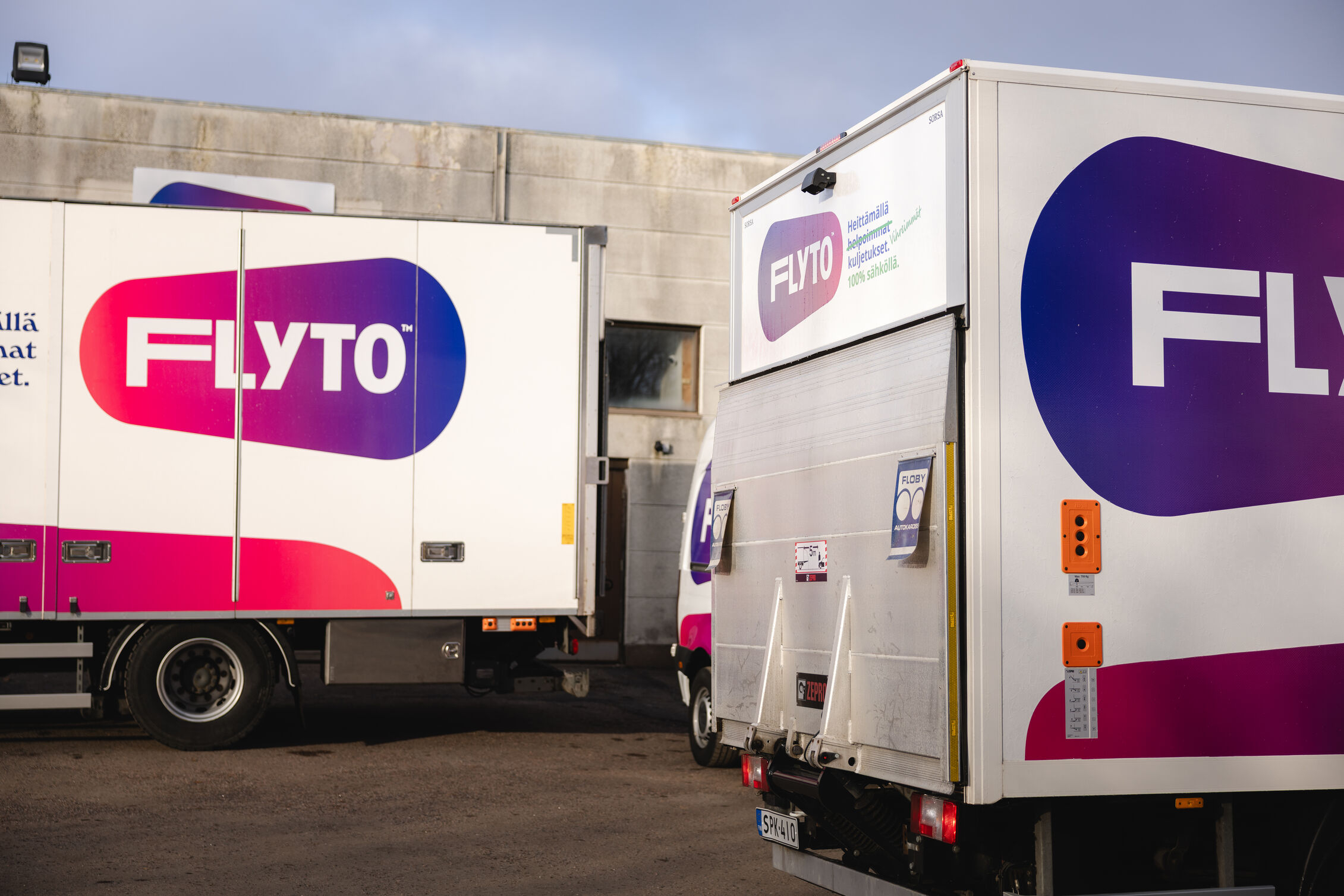
Flyto’s overseas door-to-door service (available on the Platinum package only) manages the full chain — export packing at origin, ocean or air freight, Canadian customs formalities and inland delivery to your Toronto address.
2. Settler’s effects: importing your goods duty-free
If you are establishing a residence in Canada for the first time for at least 12 months, you are a settler, and your used personal and household goods qualify for duty- and tax-free entry under tariff item 9807.00.00. The governing rules — including that goods must be "owned, possessed and used" abroad before you arrive — are set out in CBSA Memorandum D2-2-1.
Prepare two itemised lists (goods accompanying you, and goods to follow) with values, makes, models and serial numbers, and declare them on form BSF186 – Personal Effects Accounting Document. The stamped copy CBSA returns to you is what your mover or broker uses to release the sea shipment later, so the "goods to follow" declaration at your first entry is not optional. Note that some items — alcohol, tobacco, firearms, food, plants and vehicles — carry separate rules and are not covered by the settler exemption.
3. OHIP: health coverage and the (now removed) waiting period
This is the single most out-of-date claim you will read online. Ontario eliminated the three-month OHIP waiting period in 2020. The official Apply for OHIP page states there is no longer a waiting period, and that you can apply as soon as you arrive.
Coverage is not automatic, though — you must meet residency and status tests:
- Make Ontario your primary place of residence;
- Be physically present in Ontario 153 days in any 12-month period; and
- Be present 153 of your first 183 days after arriving; plus
- Hold a qualifying immigration status. Permanent residents qualify, and some work-permit holders qualify — the eligibility criteria refer to a valid work permit or record of employment showing full-time work in Ontario, with a duration condition (commonly cited as at least six months). Because the exact wording and accepted categories are updated periodically, confirm which status applies to you directly on the Apply for OHIP page before you rely on it.
Apply in person at a ServiceOntario centre with your identity, immigration-status and Ontario-residency documents. Approval typically takes a few weeks. Because private cover may be worth arranging for the gap before your card is issued, confirm your own eligibility date on the official page above.
4. Your Social Insurance Number (SIN)
You cannot legally be paid, nor access most government benefits, without a nine-digit SIN. It is free. You can apply online, by post, or in person at a Service Canada centre. Applying in person usually means you walk out with your number the same day. According to canada.ca, an online application is processed within about 5 business days, and a mailed application is processed within about 20 business days. (For a mailed application, note that Service Canada asks you to wait roughly 25 business days before checking its status — that waiting window is not the same as the processing time.) Bring your primary immigration document (for example your permanent resident confirmation or work permit).
5. Banking without a Canadian credit history
Canadian banks are federally required to open a basic personal account for you even if you have just arrived, have no job, no Canadian credit history and no money to deposit yet. The Financial Consumer Agency of Canada sets out this right, and its access-to-basic-banking guidance limits the narrow grounds on which a bank may refuse. Typically you need your passport plus one supporting document; a SIN is not required for a basic account. If a bank refuses, ask for the refusal in writing and contact the FCAC.
6. Exchanging your driver’s licence for an Ontario G
You may drive on your valid foreign licence for 60 days after becoming an Ontario resident, then you must exchange it. Ontario has full exchange agreements with every Canadian province and territory and with a list of countries — including Great Britain, Ireland, Northern Ireland, the Isle of Man, France, Germany, Austria, Belgium, Switzerland, Japan, the Republic of Korea, Taiwan, Australia, New Zealand and the United States — allowing a direct swap for a full Class G licence without road tests, per ontario.ca.
If your country is not on the agreement list, from 1 July 2026 you can claim up to one year of driving-experience credit with a valid original licence and an authentication document, but must pass the vision test, knowledge test and G2/G road tests. Licences not in English or French need a certified translation dated within six months. Exchanges are handled at DriveTest centres and select ServiceOntario locations.
7. Housing and neighbourhoods: setting expectations
Toronto is expensive and competitive, though the market has cooled from its 2023 peak. In CMHC’s 2025 Rental Market data, the average new-tenant (turnover) one-bedroom rent in Toronto was roughly CAD 2,070 per month, while long-term tenants protected by Ontario rent control paid closer to CAD 1,710 on average — so a realistic one-bedroom band is broadly CAD 1,700–2,100, with individual listings above and below that. Always confirm current figures against the CMHC Rental Market Survey. Landlords commonly ask for first and last months’ rent, proof of income and references — difficult before you have a Canadian job or credit file, so budget for that and consider a short-term rental on arrival. Downtown and midtown are pricey and transit-rich; the wider GTA (Mississauga, Brampton, Scarborough, North York, Etobicoke) trades commute time for space and value.
8. Taxes and your first year
Once you establish residential ties — a home, and often a spouse or dependants in Canada — the Canada Revenue Agency treats you as a resident for tax purposes from your arrival, and you file a return for that year. Read the official Newcomers to Canada guidance, which also explains benefit and credit payments you may claim.
Summary: first-90-days checklist
| Task | Authority | Timing | Official source |
|---|---|---|---|
| Declare goods (incl. goods to follow) | CBSA | At first entry | BSF186 |
| Apply for a SIN | Service Canada | Day 1 onward | canada.ca |
| Register for OHIP | ServiceOntario | On arrival (no wait) | ontario.ca |
| Open a bank account | Any Schedule I/II bank | First week | FCAC |
| Exchange driver’s licence | DriveTest / ServiceOntario | Within 60 days | ontario.ca |
Frequently asked questions
Is there still a three-month wait for OHIP in Ontario?
No. Ontario removed the waiting period in 2020, and eligible applicants receive immediate coverage once approved. You must still meet the residency and status tests on the official OHIP page.
Will I pay duty on my household furniture and belongings?
Not if you qualify as a settler and the goods were owned, possessed and used abroad before you arrived — they enter duty- and tax-free under tariff item 9807.00.00, declared on the BSF186. See Memorandum D2-2-1 for the exact conditions.
How long does a SIN take?
Applying in person is usually same-day. Per canada.ca, an online application is processed within about 5 business days and a mailed one within about 20 business days.
Can I keep driving on my home licence?
For 60 days after becoming a resident, yes. After that you must exchange it. Whether that is a straight swap depends on whether your country has an agreement with Ontario (ontario.ca).
Do I need a SIN before I can open a bank account?
No. A SIN is not required for a basic personal account, though the bank will ask for it if the account earns interest. Your right to a basic account is set out by the FCAC.
Where does my sea shipment actually clear customs?
Ocean containers bound for the GTA generally clear through an eastern Canadian container port and then move inland by rail or road; movers commonly use Montréal or Halifax, and air freight typically clears at Toronto Pearson — but the exact port depends on your carrier, so confirm it with your mover. CBSA’s moving to Canada page covers the general customs process.
Planning your move?
If you are relocating to Toronto from overseas, Flyto’s Platinum overseas service handles the full door-to-door chain — export packing, ocean or air freight, Canadian customs clearance and inland delivery to your GTA address. Get a tailored estimate through our quote tool: Get your Toronto moving quote.